


20 Oct 2026
CNC Surface Finishing Guide: Anodizing, Passivation and More
A CNC machined part is rarely finished when it comes off the machine. The surface left by the cutting tool may be accurate, but it is not always the right surface for the job. Depending on the application, it may need to resist corrosion, survive wear, look consistent, conduct electricity, or simply feel smooth.
Choosing the right surface finish affects performance, appearance, cost, and even dimensional accuracy. This guide explains the most common finishing options for CNC machined parts, how to match them to your material, and what to specify on your drawings to avoid surprises.
1. Why Surface Finishing Matters
Surface finishing is not just cosmetics. A finish can:
• Protect the material from corrosion, rust, or tarnish
• Increase wear resistance on sliding or contact surfaces
• Improve appearance and give consistent color and texture
• Hide machining marks on visible parts
• Change electrical or thermal behavior, for example conductive chem film on aluminum
• Prepare the surface for bonding, sealing, or painting
Because every finish also adds cost and lead time, the goal is to pick the simplest finish that meets the real requirement.
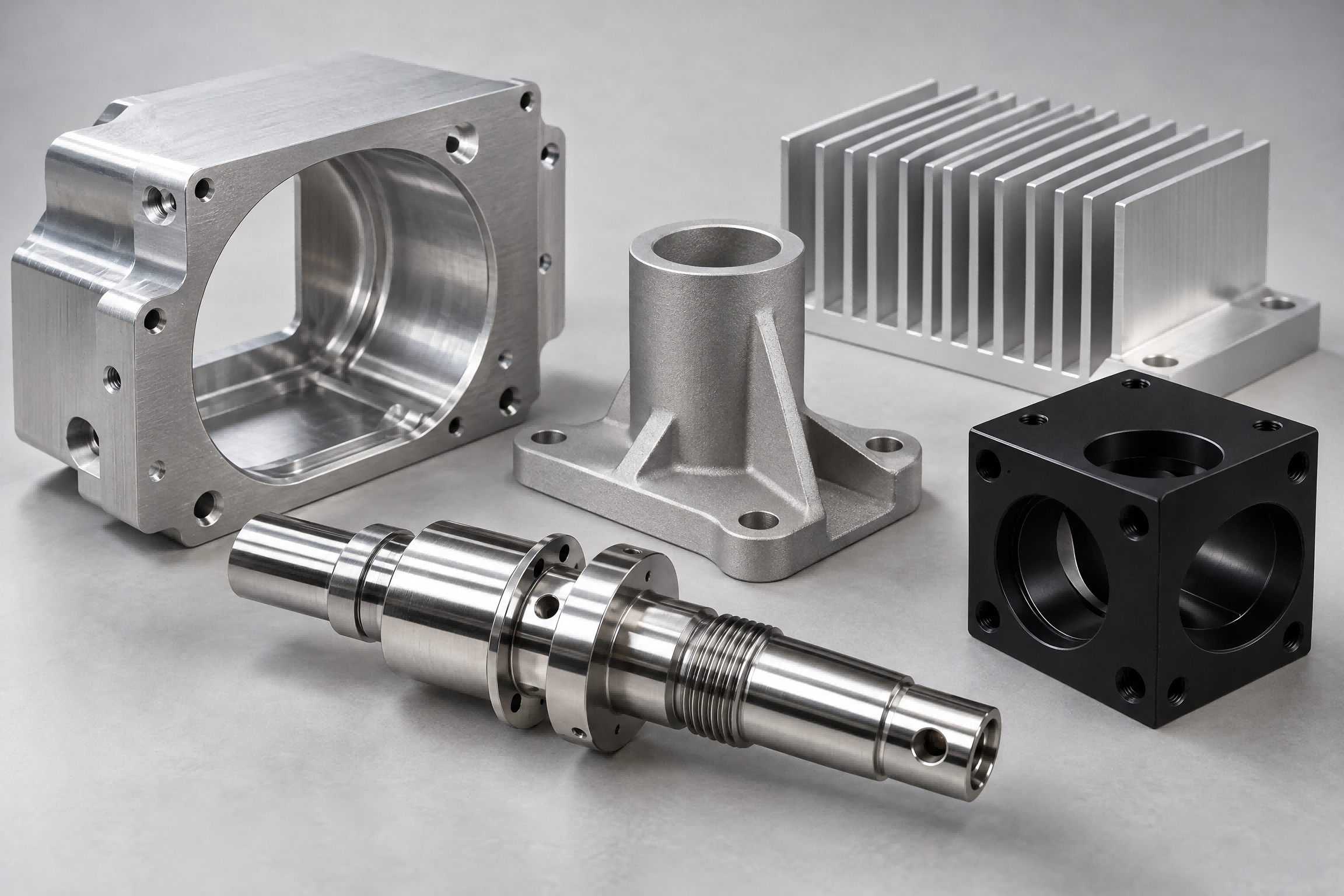
The right finish depends on material, function, and appearance requirements.
2. Start With the As-Machined Surface
Every finish begins with the machined surface. A standard as-machined finish shows fine tool marks, and it is often described by surface roughness (Ra). Many functional surfaces are perfectly acceptable as-machined, and it is the lowest-cost option.
Finer roughness needs extra finishing passes or a secondary process, which adds time and cost. Reserve smoother surfaces for sealing faces, sliding surfaces, and cosmetic areas customers will see. The same logic is covered in our guide to design for manufacturability.
3. Common Surface Finishes for CNC Machined Parts
Bead Blasting
Fine glass beads or other media are blown onto the surface to create a uniform matte texture. Bead blasting hides tool marks and is often used before anodizing for a consistent appearance. It removes very little material, but it can slightly soften sharp edges and fine details.
Anodizing (Type II) for Aluminum
Anodizing grows a hard oxide layer from the surface of aluminum. It improves corrosion resistance and can be dyed in many colors, which makes it the standard choice for aluminum housings, covers, and heat sinks. The coating is part growth into the metal and part build-up on top, so tight dimensions need to be planned. The oxide layer is also electrically insulating.
Hard Anodizing (Type III)
A thicker, denser anodic layer used where wear resistance matters, such as sliding surfaces and tooling. It is usually darker in color and builds up more than standard anodizing, so tolerances on mating features need extra attention.
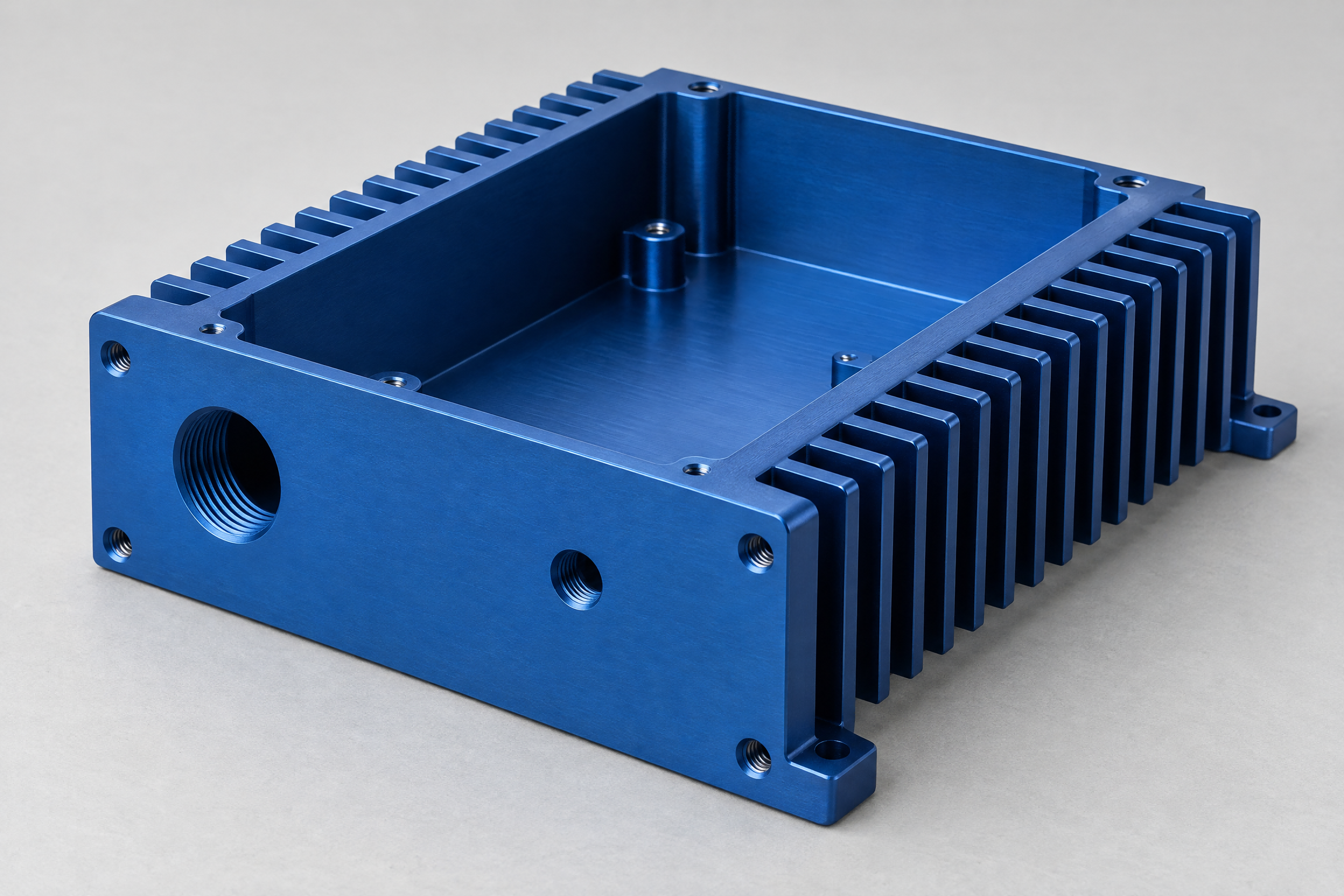
Anodizing adds corrosion resistance and color to aluminum parts.
Chromate Conversion Coating (Chem Film)
A very thin conversion coating on aluminum that protects against corrosion while keeping the surface electrically conductive. It adds almost nothing to the dimensions, so it is useful for grounding points and tight-fit parts.
Passivation for Stainless Steel
Passivation is a chemical treatment that removes free iron from the surface of stainless steel and helps restore its natural protective oxide layer. It does not change dimensions or color in any noticeable way, which makes it popular for precision stainless parts. Common reference standards include ASTM A967.
Black Oxide for Steel
A thin conversion coating that gives carbon and alloy steel a dark, low-glare look and mild corrosion resistance, especially when finished with oil. It adds almost no thickness, so it suits fasteners, tools, and precision steel components.
Plating: Nickel, Zinc and Others
Plating deposits a metal layer onto the part. Electroless nickel gives an even coating, even in recesses, with good corrosion and wear resistance. Zinc is a low-cost way to protect steel from rust. Because plating adds thickness, dimensions and fits must be planned in advance. Many customers also require RoHS or REACH compliance, so confirm what is allowed for your market.
Polishing and Electropolishing
Polishing improves smoothness and brightness. Electropolishing is a chemical process for stainless steel that smooths microscopic peaks and leaves a cleaner surface, which is helpful in medical and food-related applications. Both remove a small amount of material.
Painting and Powder Coating
Coatings that add color and protection. They also add the most thickness, so critical surfaces, threads, and mating features usually need to be masked.
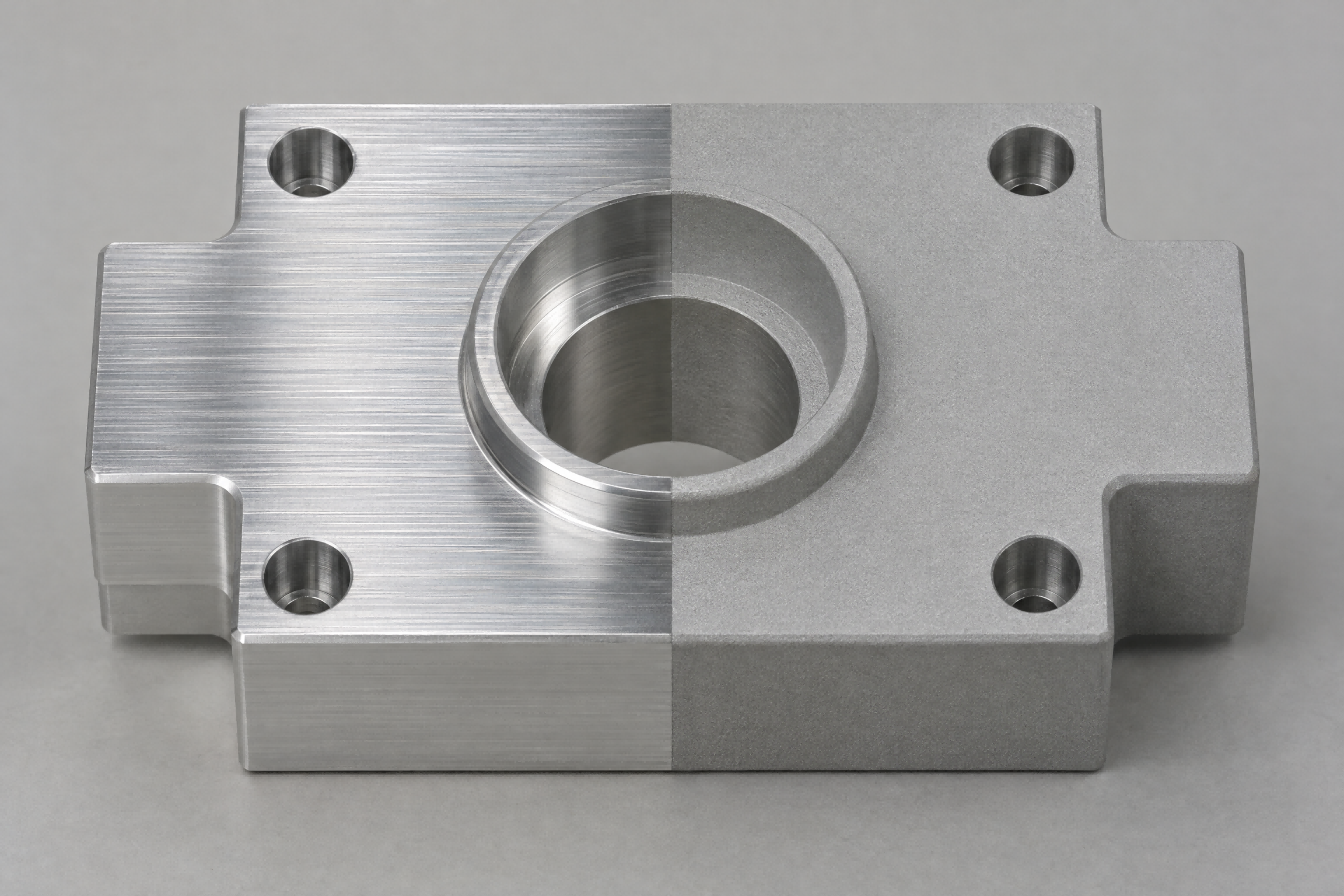
Bead blasting hides tool marks and gives a uniform matte appearance.
4. Quick Comparison of Common Finishes
The table below summarizes typical uses. Exact results depend on the alloy, the finishing shop, and the specification.
Finish | Typical materials | Main purpose | Dimensional effect |
As-machined | All | Lowest cost; tool marks remain | None |
Bead blasting | Aluminum, stainless steel, steel | Uniform matte look; hides tool marks | Very small |
Anodizing (Type II) | Aluminum | Corrosion resistance, color, appearance | Small build-up |
Hard anodizing (Type III) | Aluminum | Wear and corrosion resistance | Noticeable build-up |
Chromate conversion (chem film) | Aluminum | Corrosion protection, electrical conductivity | Negligible |
Passivation | Stainless steel | Restores corrosion resistance | Negligible |
Black oxide | Carbon and alloy steel | Mild corrosion resistance, low-glare finish | Negligible |
Electroless nickel plating | Steel, aluminum, brass | Corrosion and wear resistance, uniform coating | Small to moderate build-up |
Zinc plating | Steel | Low-cost corrosion protection | Small build-up |
Polishing / electropolishing | Stainless steel, aluminum, brass | Smooth, bright, easy-to-clean surface | Small material removal |
Painting / powder coating | Metals | Color, appearance, protection | Largest build-up |
5. Choosing a Finish by Material
Material | Common finishing choices | Notes |
Aluminum (6061, 7075, etc.) | Anodizing, hard anodizing, chem film, bead blasting, polishing | Anodizing is the most common choice for housings and heat sinks |
Stainless steel (304, 316, etc.) | Passivation, electropolishing, bead blasting, polishing | Passivation protects without changing size or color |
Carbon and alloy steel | Black oxide, zinc plating, nickel plating, painting | Bare steel rusts, so a finish is almost always needed |
Brass and copper | Polishing, nickel plating, clear protective coating | Tarnishes if left unprotected |
Engineering plastics (POM, PEEK) | Usually as-machined; light bead blasting if needed | Plating and anodizing generally do not apply |
For precision parts used in robotics, automation, medical equipment, and similar applications, aluminum components are commonly anodized or chem filmed, and stainless steel components are commonly passivated. Steel components often need black oxide or plating because bare steel rusts.
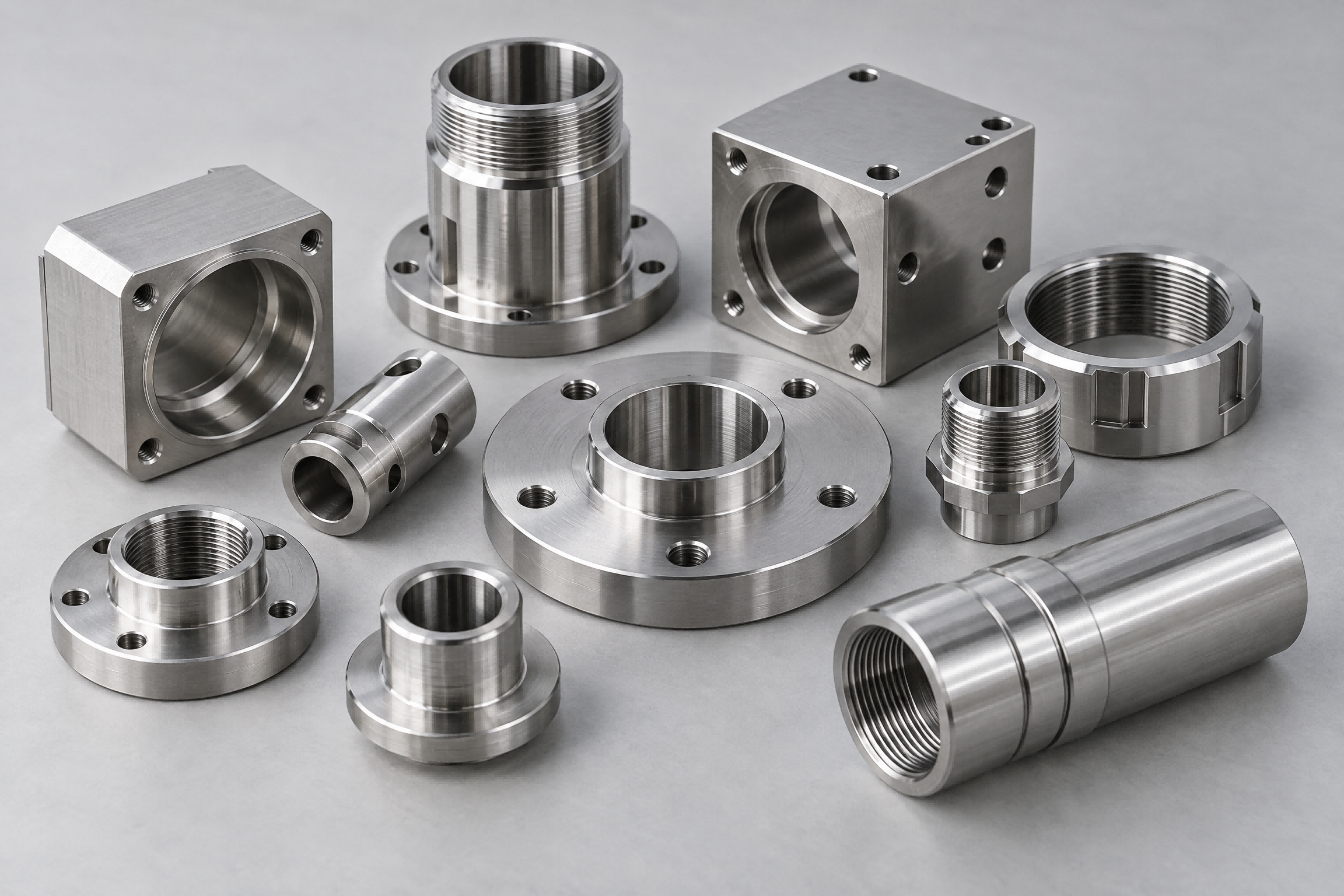
Passivation protects stainless steel without noticeably changing dimensions.
6. How Finishing Affects Tolerances
A finish that adds thickness changes the final dimensions. If your part has a tight bore, a thread, or a mating surface, you need to decide whether the dimension on the drawing applies before or after finishing.
• State clearly whether dimensions apply before or after the finish.
• For coatings that build up, machine to a pre-finish size so the finished part lands in tolerance.
• Mask threaded holes, press-fit bores, and electrical contact areas where the coating would cause problems.
• Break sharp edges slightly, because coatings do not cover sharp edges evenly.
• Allow for finishing contact marks from racks or fixtures, and tell the supplier where they are acceptable.
Dimensional inspection should be done after finishing, when the part is in its final state. Tight tolerances are verified on a 3D CMM in a temperature-controlled lab, and the result is recorded in a traceable report.
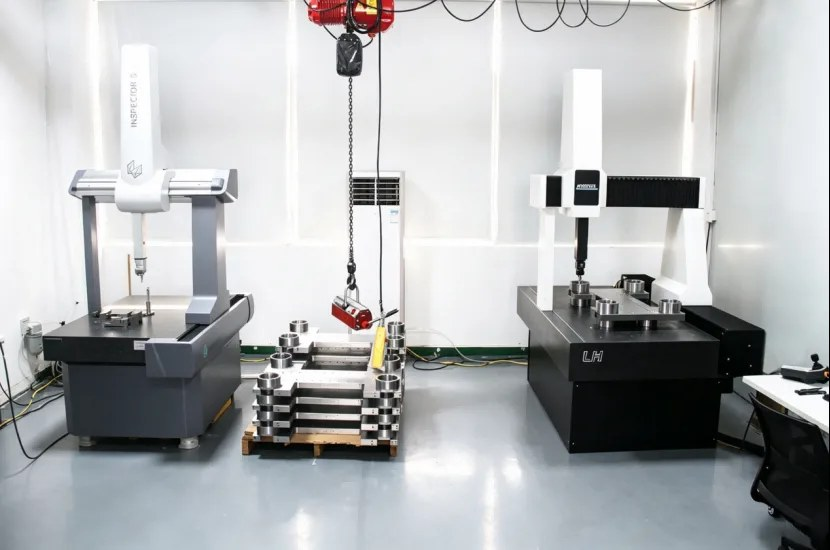
Final dimensions are verified on CMMs after finishing.
7. Cost and Lead Time
Finishing is often done as a separate step after machining, sometimes by a specialized shop, so it can add several days to your lead time. Cost depends on the process, part size, batch quantity, and the amount of masking required. A few ways to control both:
• Use as-machined or bead-blasted surfaces wherever function allows.
• Limit premium finishes to visible or functional surfaces.
• Standardize finishes across a product family to simplify batches.
• Share finishing requirements at the quote stage so the schedule includes them.
8. How to Specify a Finish on Your Drawing
Vague notes cause rework. A good finishing note names the process, the standard or class, any thickness or color requirement, and the areas to mask. For example:
• Anodize, Type II, clear, per MIL-A-8625. Mask threaded holes.
• Passivate per ASTM A967.
• Electroless nickel plate, specified thickness range. Dimensions apply after plating.
If you are unsure, send a sample drawing and the intended use, and your machining partner can suggest a practical option.
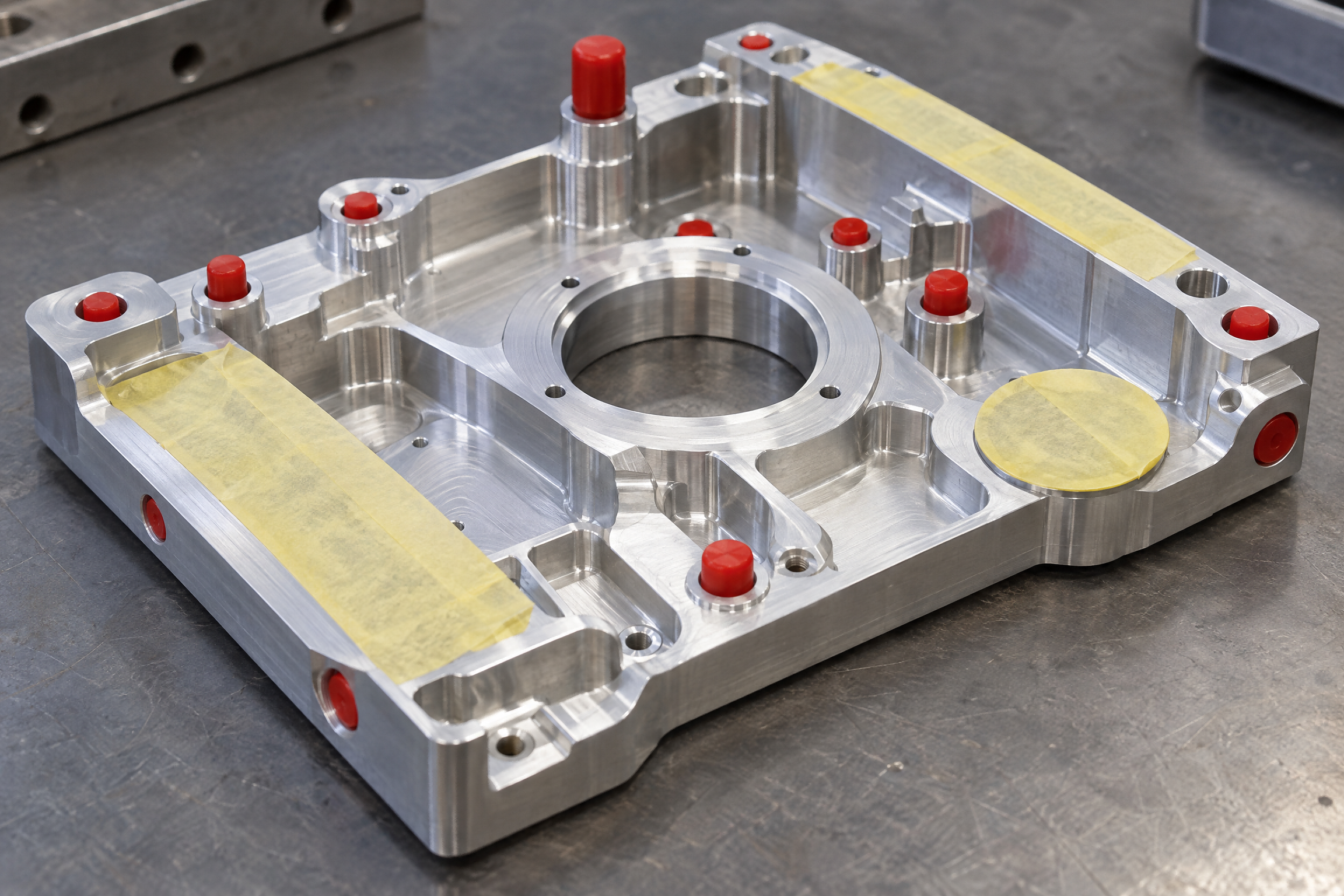
Masking protects threads and critical features during finishing.
9. Common Mistakes When Choosing a Finish
• Over-specifying: Asking for a premium finish on every surface when only some are visible or functional.
• Ignoring thickness: Forgetting that anodizing and plating change dimensions, which can break a tight fit.
• Mixing materials and finishes: Choosing a finish that does not suit the alloy, such as expecting anodizing on non-aluminum parts.
• Not planning for color consistency: Color can vary between batches and alloys, so set expectations for cosmetic parts.
• Leaving it to the end: Finishing time and cost are easy to overlook until the schedule is already tight.
Quick Surface Finish Checklist
1. Is the part a functional, protective, or cosmetic piece?
2. What is the material, and which finishes suit it?
3. Do any dimensions or fits change with the coating thickness?
4. Which surfaces, threads, or holes must be masked?
5. Is a fine surface roughness really needed, or is as-machined enough?
6. Are there compliance requirements such as RoHS or REACH?
7. Is the finish clearly written on the drawing?
8. Is finishing time included in the lead time?
Frequently Asked Questions
What is the most common finish for CNC machined aluminum parts?
Anodizing is the most common choice, usually Type II for appearance and corrosion resistance, or Type III hard anodizing where wear resistance is needed.
Does anodizing change part dimensions?
Yes. Anodizing grows partly into the metal and partly out from it, so surfaces grow slightly. The effect is small for standard anodizing and larger for hard anodizing, so tight-tolerance features need to be planned.
What is passivation, and when is it needed?
Passivation is a chemical treatment that removes free iron from stainless steel surfaces and helps the part resist corrosion. It is widely used on precision stainless parts because it does not noticeably change size or appearance.
Can plastic CNC parts be finished?
Engineering plastics such as POM and PEEK are usually left as-machined, with light bead blasting or polishing if needed. Metal finishes such as anodizing or plating generally do not apply.
Conclusion
The best surface finish is the one that matches how the part is used. Start with the material and function, choose the simplest finish that meets the requirement, plan for any dimensional change, and write the finish clearly on the drawing. Done well, finishing improves performance and appearance without adding unnecessary cost or lead time.
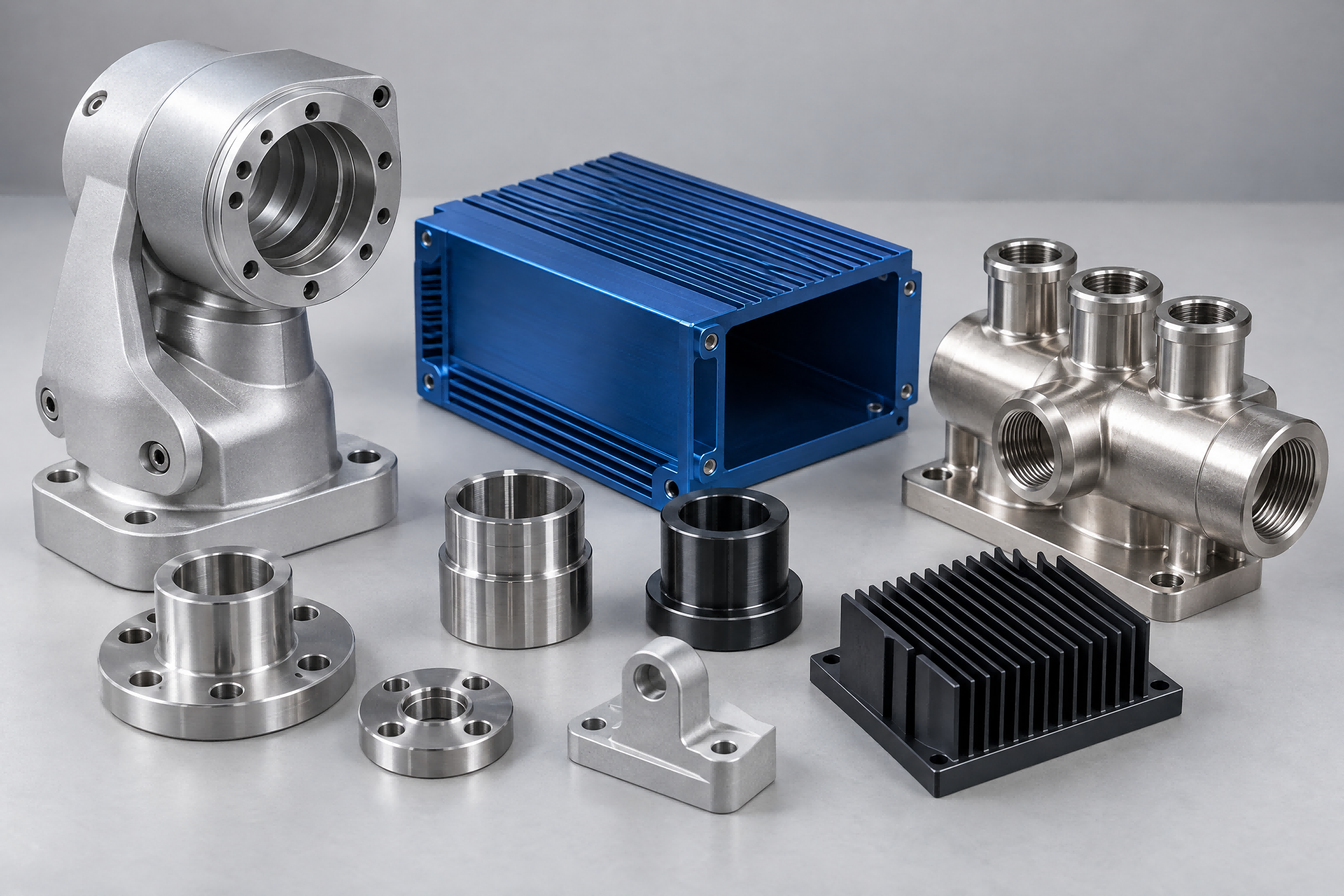
Finished precision CNC machined parts from Hotar Machining.
If you need precision CNC machined parts with the right surface finish, our team at Hotar Machining can help. Send us your drawings and finishing requirements for a quote and engineering feedback.