


18 Oct 2026
DFM for CNC Machined Parts: 10 Design Tips to Cut Cost and Lead Time
Most of the cost of a CNC machined part is decided before any metal is cut. Once a design is released, features such as thin walls, deep pockets, and tight tolerances lock in machining time, tooling needs, and inspection effort. That is why design for manufacturability (DFM) is one of the most effective ways to lower cost and shorten lead time without hurting performance.
This guide covers 10 practical DFM tips you can apply to your next CNC drawing, whether you are designing a prototype or preparing a part for volume production.
What Is DFM for CNC Machining?
DFM means designing a part so it can be machined efficiently, accurately, and repeatably. A manufacturable design works with the way cutting tools, fixtures, and machines actually behave, instead of working against them.
The main cost drivers in CNC machining are:
• Machine time, driven by feature complexity and cutting conditions
• Number of setups and the fixturing they require
• Special tooling and long or small-diameter tools
• Material cost and how much of the stock becomes chips
• Inspection effort, especially for tight tolerances and GD&T
• Surface finishing and other post-processing
Good DFM reduces every one of these without changing what the part does.
|
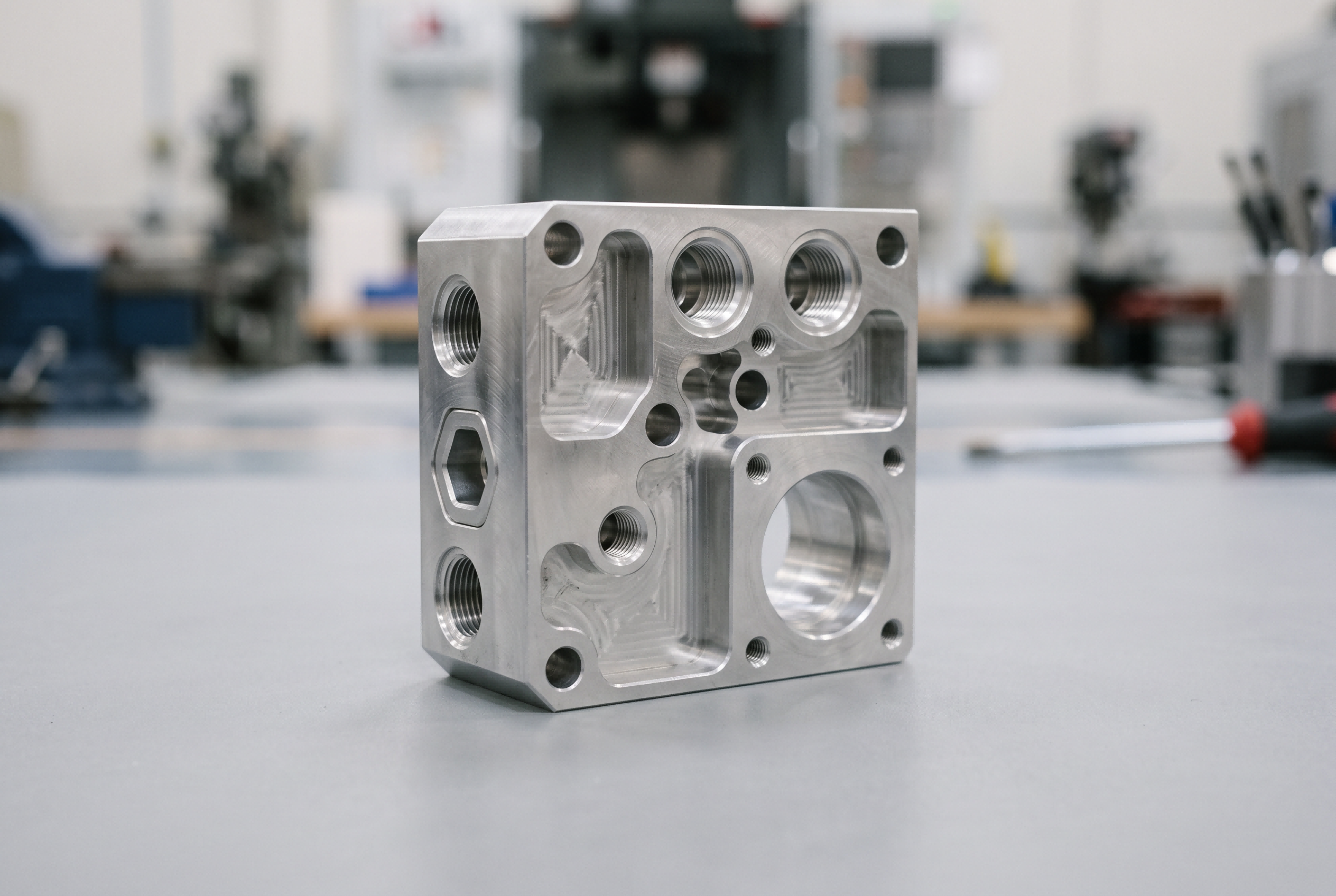
Simple, well-planned features machine faster and more consistently.
Tip 1: Add Radii to Internal Corners
Cutting tools are round, so they cannot produce perfectly sharp internal corners. A sharp corner either forces the shop to use a very small tool, which is slow and fragile, or requires an extra process. Specify an internal corner radius slightly larger than the radius of the tool that will cut the pocket, and use the same radius throughout the part where possible. This lets one tool machine many features in a single pass.
|
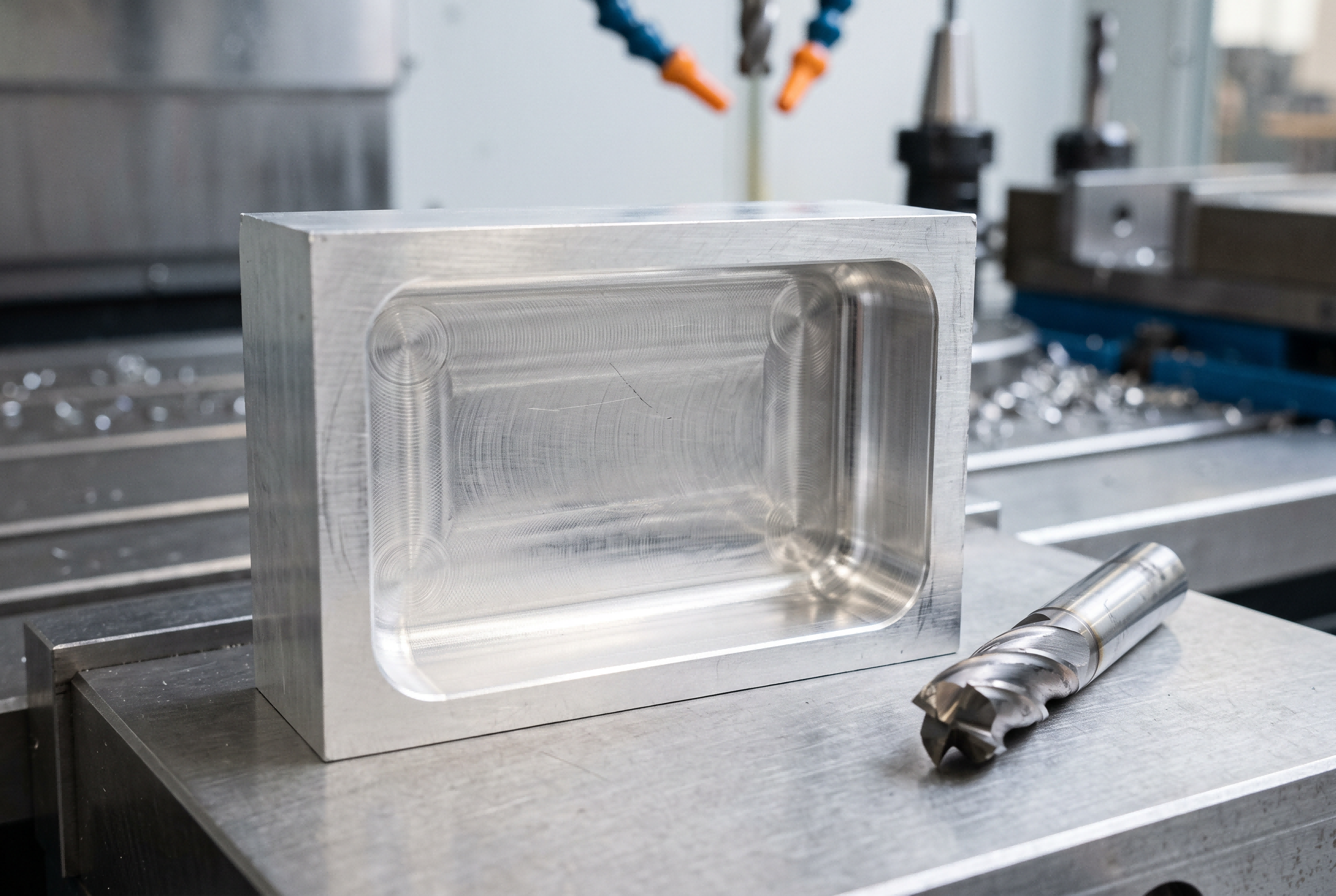
Internal radii let a standard tool machine the pocket cleanly and quickly.
Tip 2: Keep Pockets and Cavities Reasonably Shallow
The deeper and narrower a pocket is, the longer the tool must be, and long tools bend and vibrate. As a general guideline, keep cavity depth to a few times the cavity width, and confirm the limit with your machining partner for your material. If a deep feature is unavoidable, a wider opening or a stepped design can make it far easier to machine.
Tip 3: Avoid Excessively Thin Walls
Thin walls flex under cutting forces, which causes chatter, poor surface finish, and dimensional errors. Metals generally tolerate thinner walls than engineering plastics, but the thinner the wall, the higher the scrap risk. Where weight or space forces thin sections, consider adding ribs, keeping the wall short, or leaving extra stock for a final finishing pass. Check the practical minimum for your material and part size with your supplier early.
|
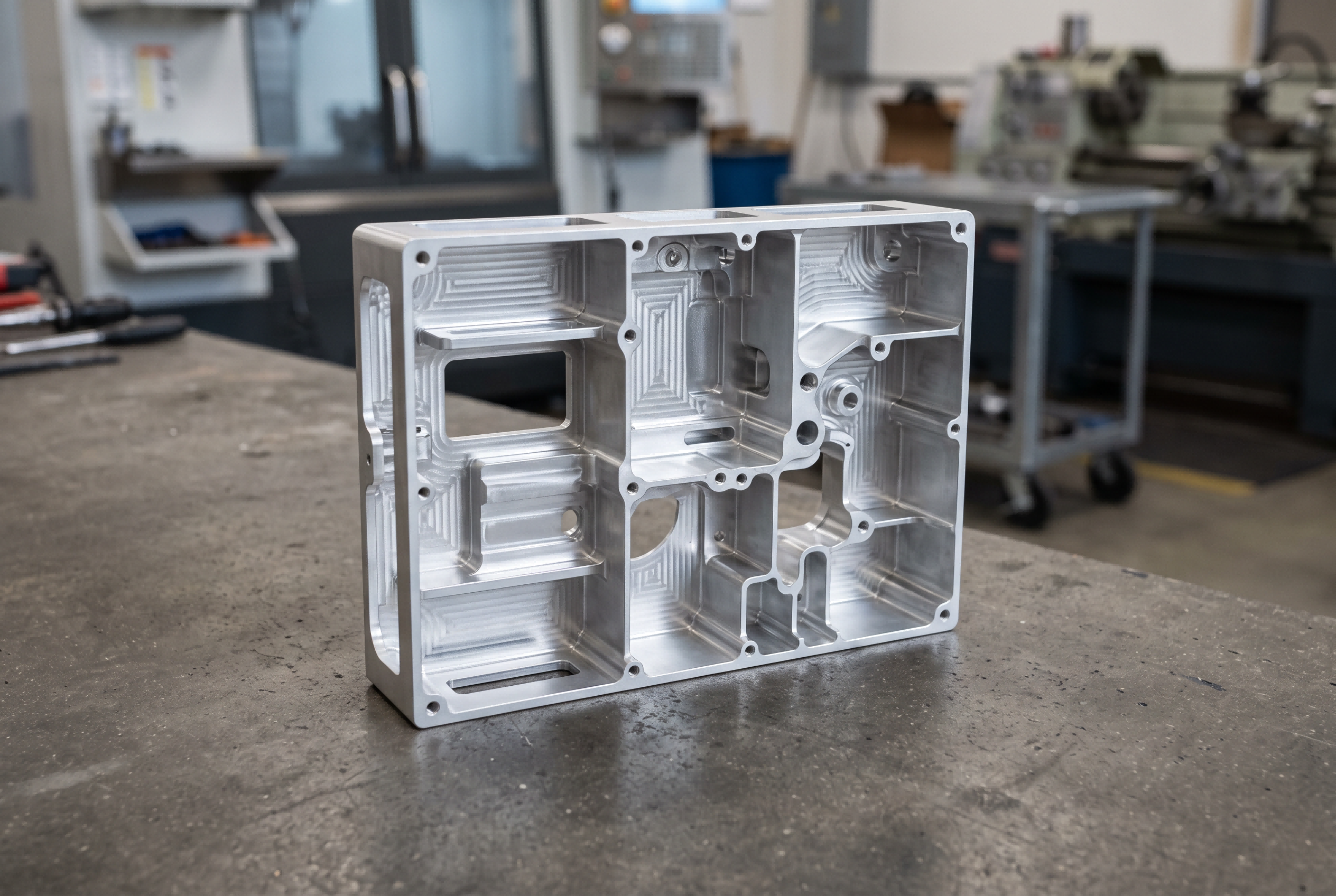
Thin walls need careful design and process control to avoid distortion.
Tip 4: Design Holes and Threads with Standard Sizes
Holes made with standard drill sizes are quick and inexpensive. Odd diameters may need special tools or extra boring steps. A few simple rules help:
• Use standard drill and thread sizes whenever possible.
• Limit hole depth: Very deep holes are slower and harder to keep straight.
• Avoid unnecessary flat-bottom blind holes: Drills leave a cone-shaped bottom, so a flat bottom needs extra work.
• Keep thread length practical: Engaging much more than about one and a half to two times the thread diameter adds little strength but adds machining time.
• Avoid intersecting holes: Cross-drilled holes can cause burrs that are hard to remove.
|
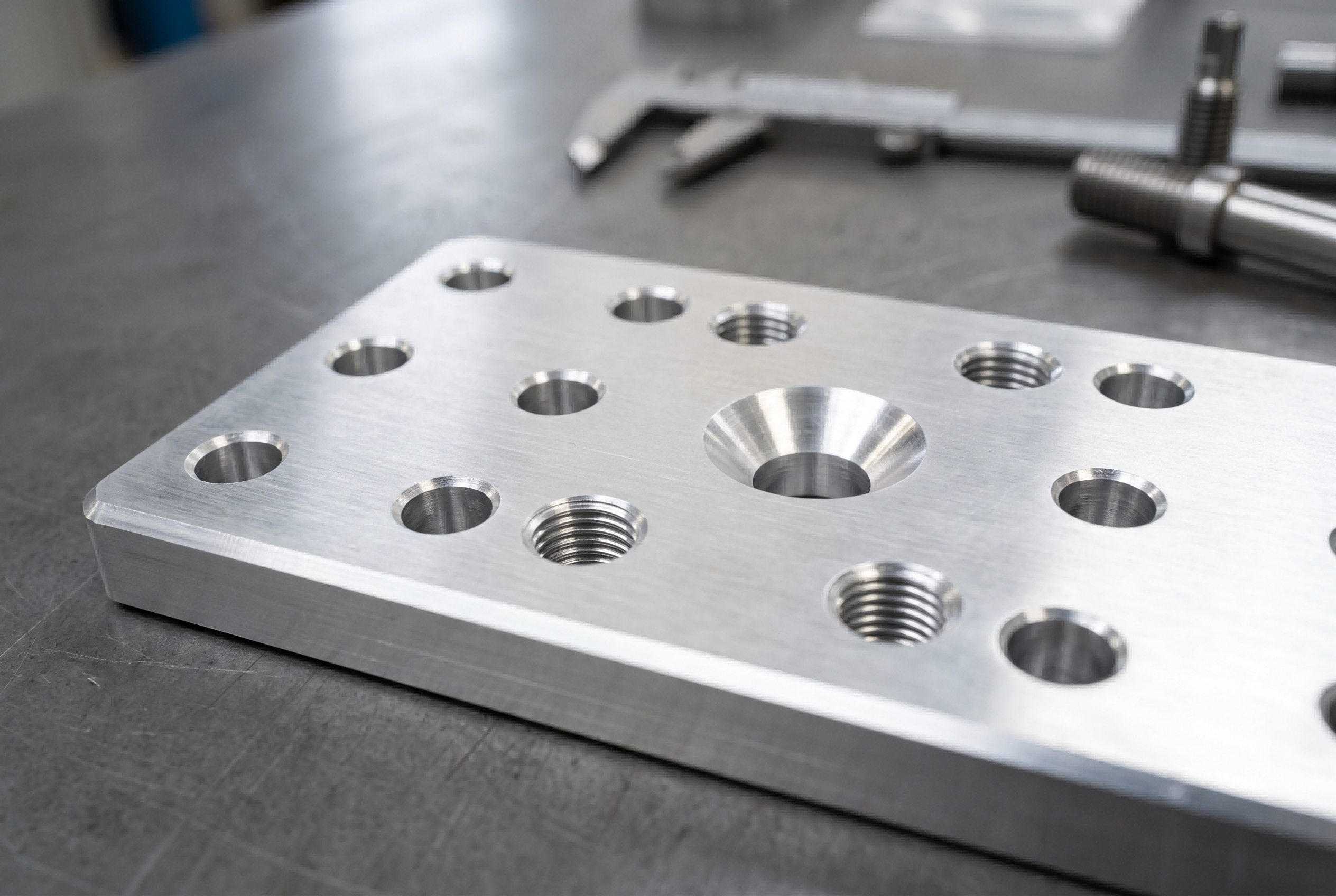
Standard hole and thread sizes are faster to machine and easier to inspect.
Tip 5: Reduce the Number of Setups
Every time a part is unclamped and repositioned, you add time, fixturing cost, and a chance for error. Design features so they can be reached from as few directions as possible. Grouping features on fewer faces, or using a machine with 4- or 5-axis capability, lets the shop machine more of the part in one setup. That shortens lead time and keeps related features more accurately positioned.
|
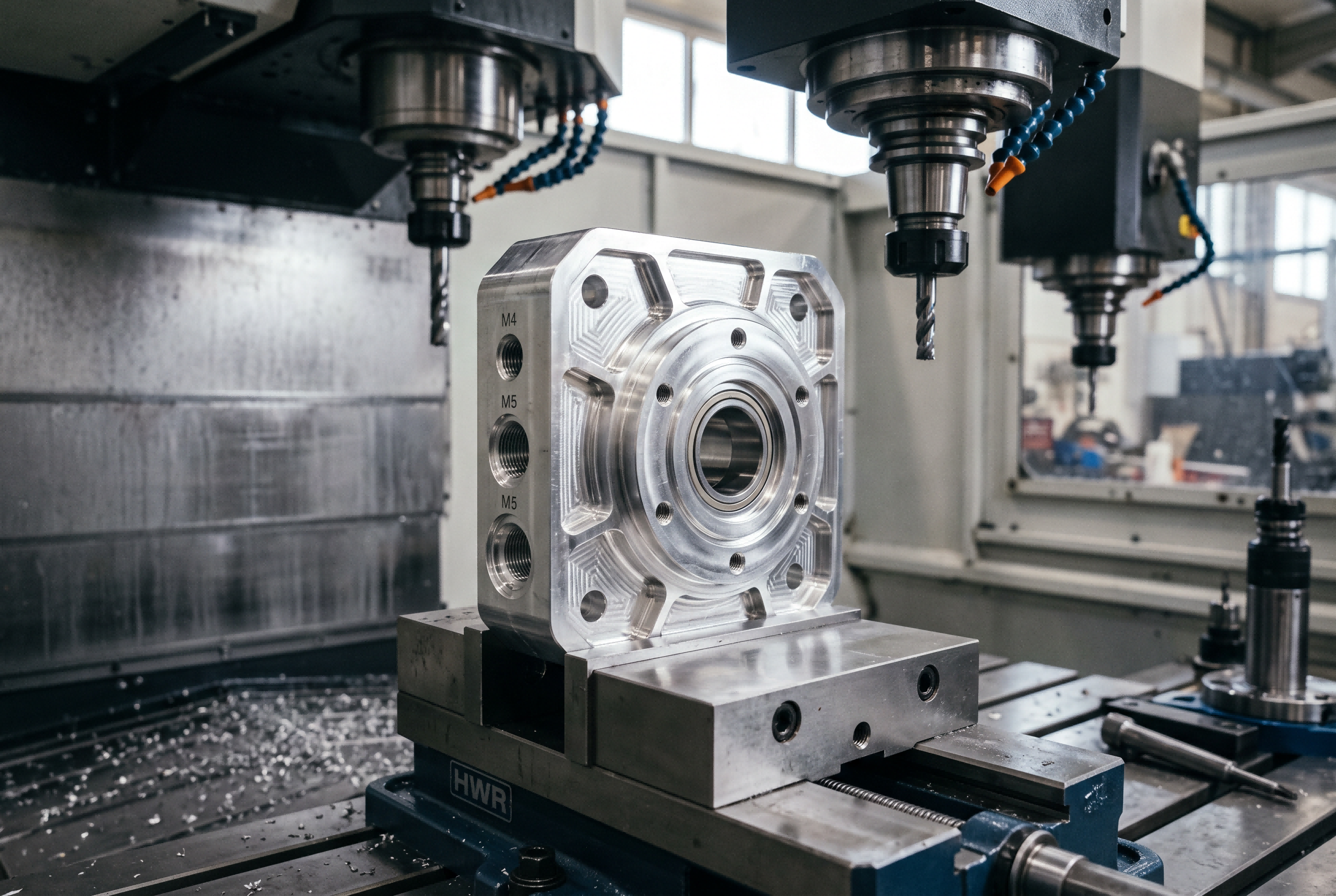
Fewer setups reduce cost and improve feature-to-feature accuracy.
Tip 6: Apply Tight Tolerances Only Where They Matter
Tolerance is one of the biggest cost levers. Our production can hold tolerances as tight as 0.002 mm on suitable features, but that capability should be reserved for the dimensions that truly affect fit or function. Use a general tolerance for non-critical features and call out tight limits only on bearing seats, mating faces, and similar critical areas. Tight tolerances also increase inspection time, since they often need full CMM measurement instead of sampling.
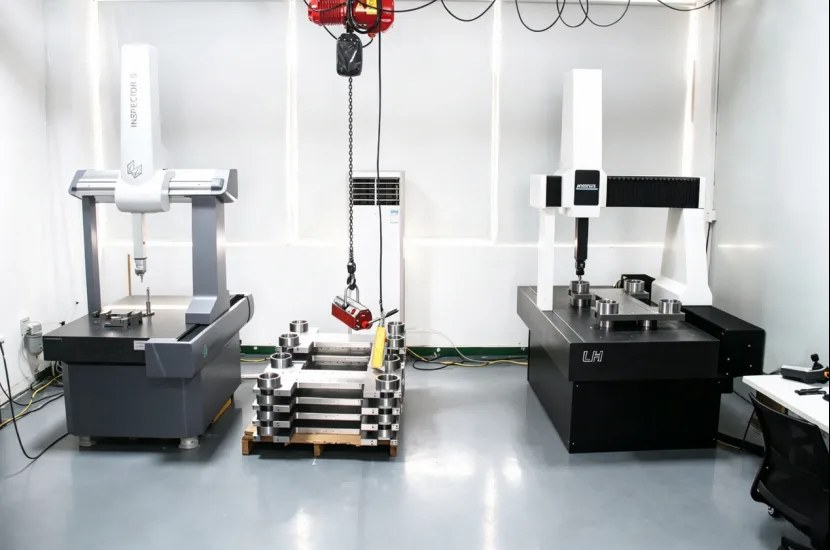
Tight tolerances are verified on CMMs in our constant-temperature lab.
Tip 7: Specify Surface Finish Sensibly
A standard as-machined finish is usually sufficient for most functional surfaces. Finer finishes need extra finishing passes or secondary processes, which add time and cost. Reserve fine finishes for sealing faces, sliding surfaces, and cosmetic areas that customers will see, and keep other surfaces at the standard finish. Remember that processes such as anodizing or plating change dimensions slightly, so account for that on tight-tolerance features.
|
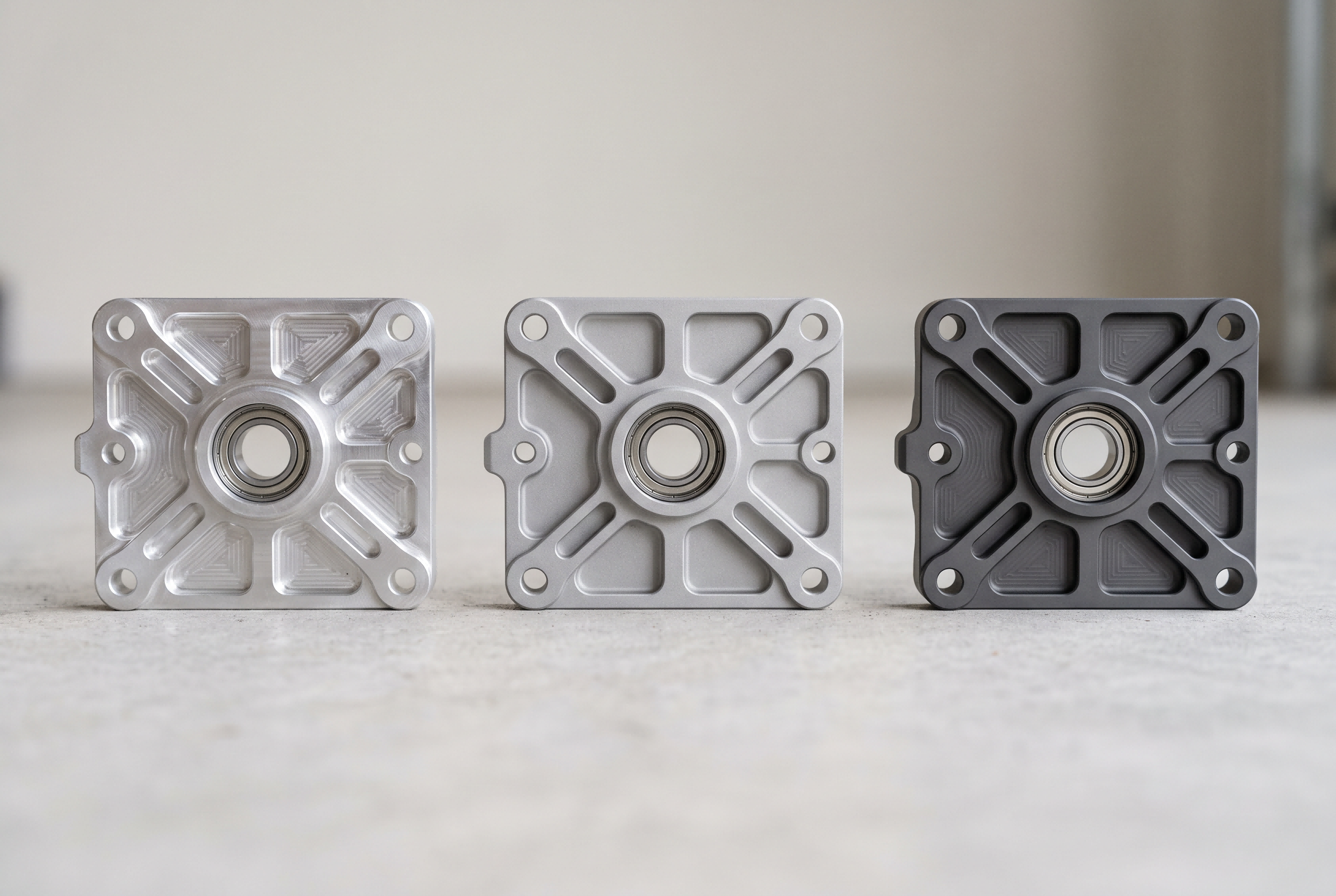
Choose the finish each surface really needs: functional, sealing, or cosmetic.
Tip 8: Choose Materials for Machinability and Availability
Material affects cutting speed, tool wear, and price. Free-machining grades cut faster and more cleanly, while harder or tougher alloys increase machining time and tool cost. Standard stock sizes also matter, because a part that fits a common plate or bar size wastes less material and ships sooner. If your application does not require a special alloy, a more machinable option can reduce cost and lead time noticeably.
Tip 9: Remove Features That Add Cost but Not Function
Some features look small on the drawing but take a lot of machine time:
• Deep engraved text, logos, and decorative patterns
• Undercuts and features that need special cutters
• Very small features and tiny chamfers on every edge
• Complex 3D surfaces where a simpler shape would work
Review each feature and ask whether it serves a purpose. If it does not, simplify or remove it. If it is only cosmetic, consider a lighter alternative such as shallow marking.
Tip 10: Provide a Complete Drawing Package
Incomplete information is a common cause of delays. For a faster, more accurate quote, send:
• 3D CAD model (such as STEP) and a 2D drawing with critical dimensions and tolerances
• Material and any required heat treatment or certification
• Surface finish and post-processing requirements
• Quantities, including expected future volumes
• Inspection and documentation requirements, such as CMM reports
A clear package lets the supplier flag problems before cutting starts, instead of finding them mid-production.
Quick Reference: Design Choices and Their Cost Impact
Design choice | Effect on cost and lead time | Better alternative |
Sharp internal corners | Needs very small tools or extra operations | Add a radius larger than the tool radius |
Very deep, narrow pockets | Long, flexible tools; slow cutting | Reduce depth or widen the pocket |
Very thin walls | Vibration, distortion, scrap risk | Thicken walls or add ribs |
Tight tolerance on every dimension | More finishing and full inspection | Tight limits only on critical features |
Features on many different sides | Extra setups and fixtures | Group features on fewer faces |
Non-standard hole sizes | Special tools or extra operations | Use standard drill and thread sizes |
A Simple DFM Checklist
1. Do internal corners have radii that suit standard tools?
2. Are pockets and holes within a reasonable depth?
3. Are walls thick enough for the material and size?
4. Can the part be machined in as few setups as possible?
5. Are tight tolerances limited to critical features?
6. Is the surface finish appropriate for each surface?
7. Is the material machinable and available in standard stock sizes?
8. Have decorative or non-functional features been removed?
9. Is the drawing package complete?
|
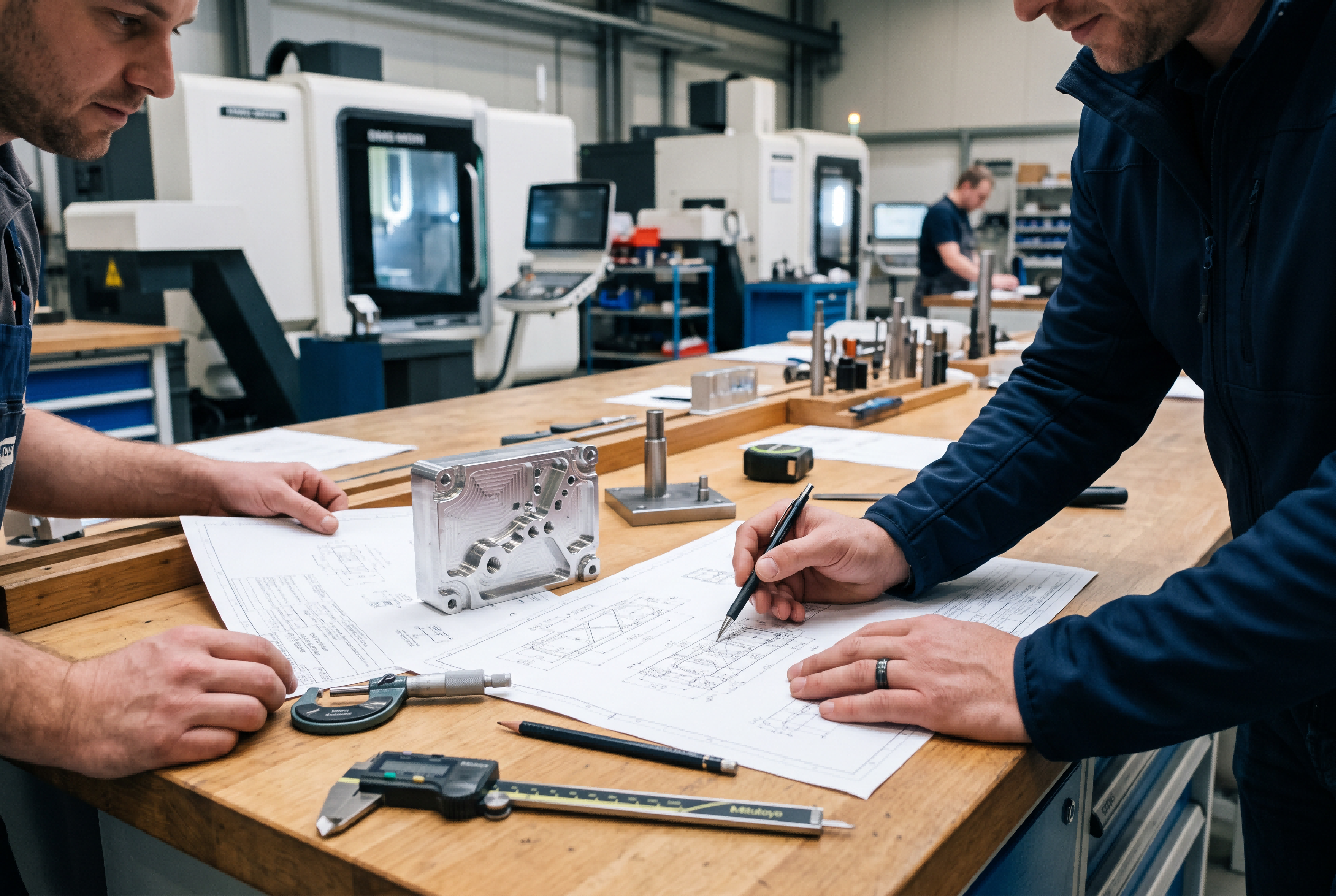
A short DFM review before machining often saves cost and lead time.
Frequently Asked Questions
What does DFM mean in CNC machining?
DFM stands for design for manufacturability. It means adjusting a part's design so it can be machined efficiently and reliably, which usually lowers cost and shortens lead time.
How can I reduce the cost of CNC machined parts?
The biggest levers are simplifying features, reducing setups, relaxing non-critical tolerances, choosing a machinable material, and giving the supplier a complete drawing package.
When should I involve my machining partner in the design?
As early as possible. A short review before the design is finalized is far cheaper than redesigning after quotes or first samples reveal problems.
Do DFM changes affect part performance?
Good DFM changes keep function intact. They remove cost from features that do not affect fit or performance, such as sharp internal corners, over-tight tolerances on non-critical dimensions, or decorative details.
Conclusion
DFM is not about making parts worse. It is about spending precision and machine time where they matter and removing cost from everything else. Add radii, keep features reachable, apply tolerances with purpose, choose practical materials, and share a complete drawing package. The result is faster quotes, shorter lead times, and parts that are easier to produce consistently.
|
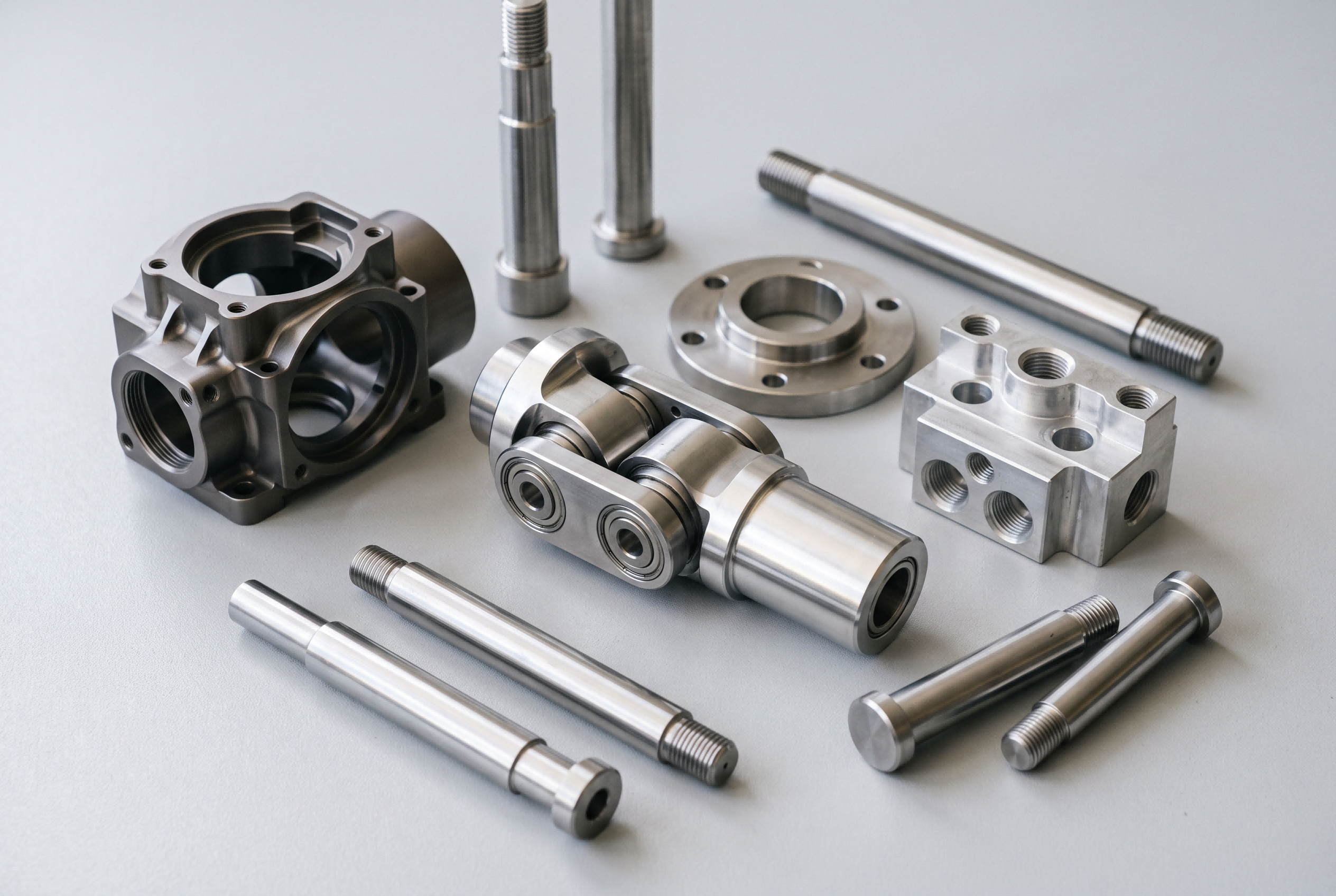
Precision CNC machined parts from Hotar Machining.
If you are developing precision CNC machined parts and want feedback on manufacturability, our team at Hotar Machining can help. Send us your drawings for a quote and engineering feedback.