


28 Oct 2026
CNC Machining Cost: What Drives the Price and How to Estimate It
Two parts that look similar can have very different prices. One may take 10 minutes to machine, the other an hour. One may use common stock, the other an expensive alloy. One may need a quick visual check, the other a full CMM report. If you understand what drives CNC machining cost, you can estimate prices more realistically, compare quotes fairly, and make design choices that save money.
This guide explains how CNC machining is priced, the main cost drivers, a simple way to estimate the cost of a part, and practical ways to lower it.
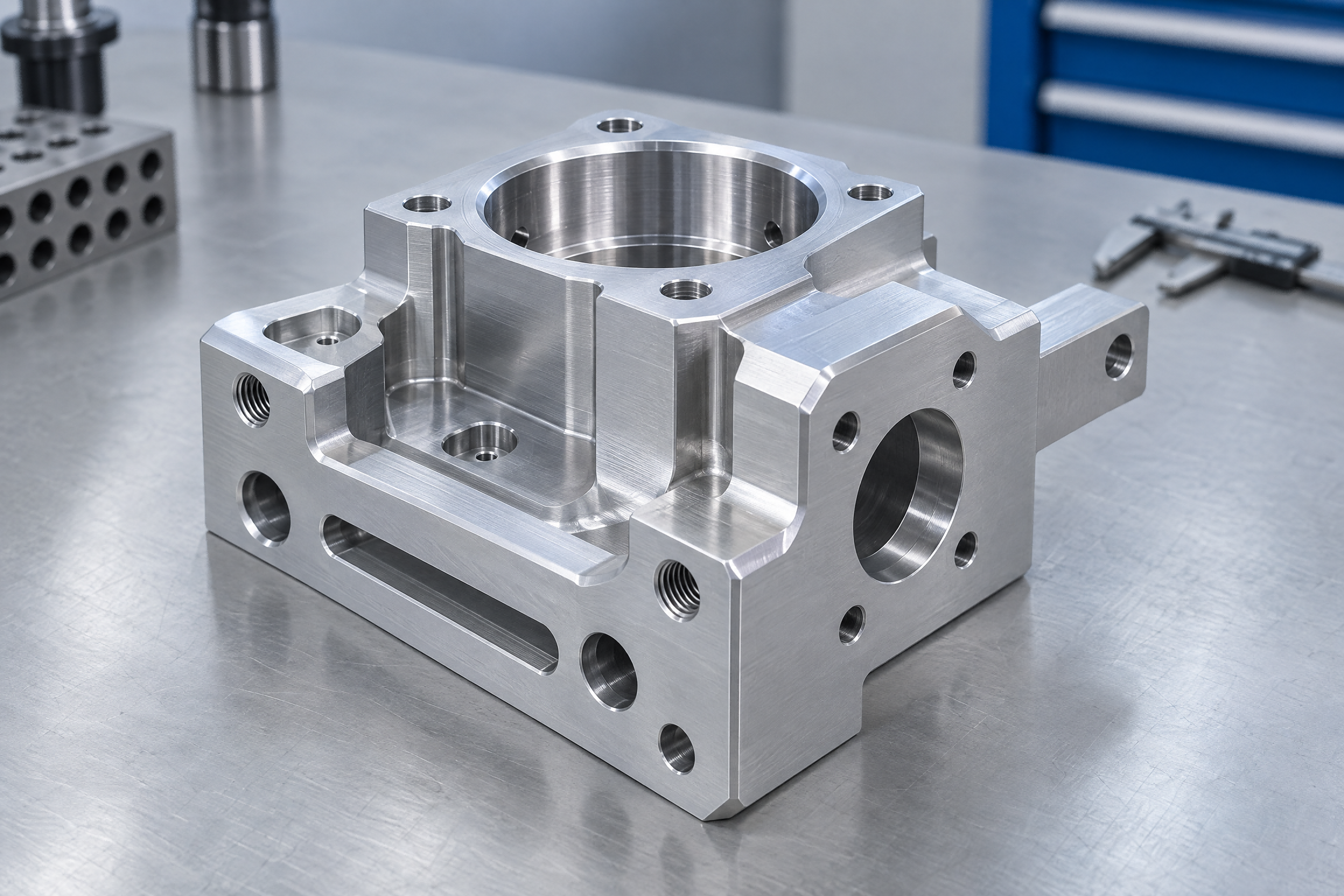
Features, material, tolerances, and quantity all shape the final price.
1. How CNC Machining Is Priced
Almost every quote is built from the same pieces: material, setup and programming, machining time, tooling, finishing, inspection, and overhead plus margin. The unit price is the total for the order divided by the quantity.
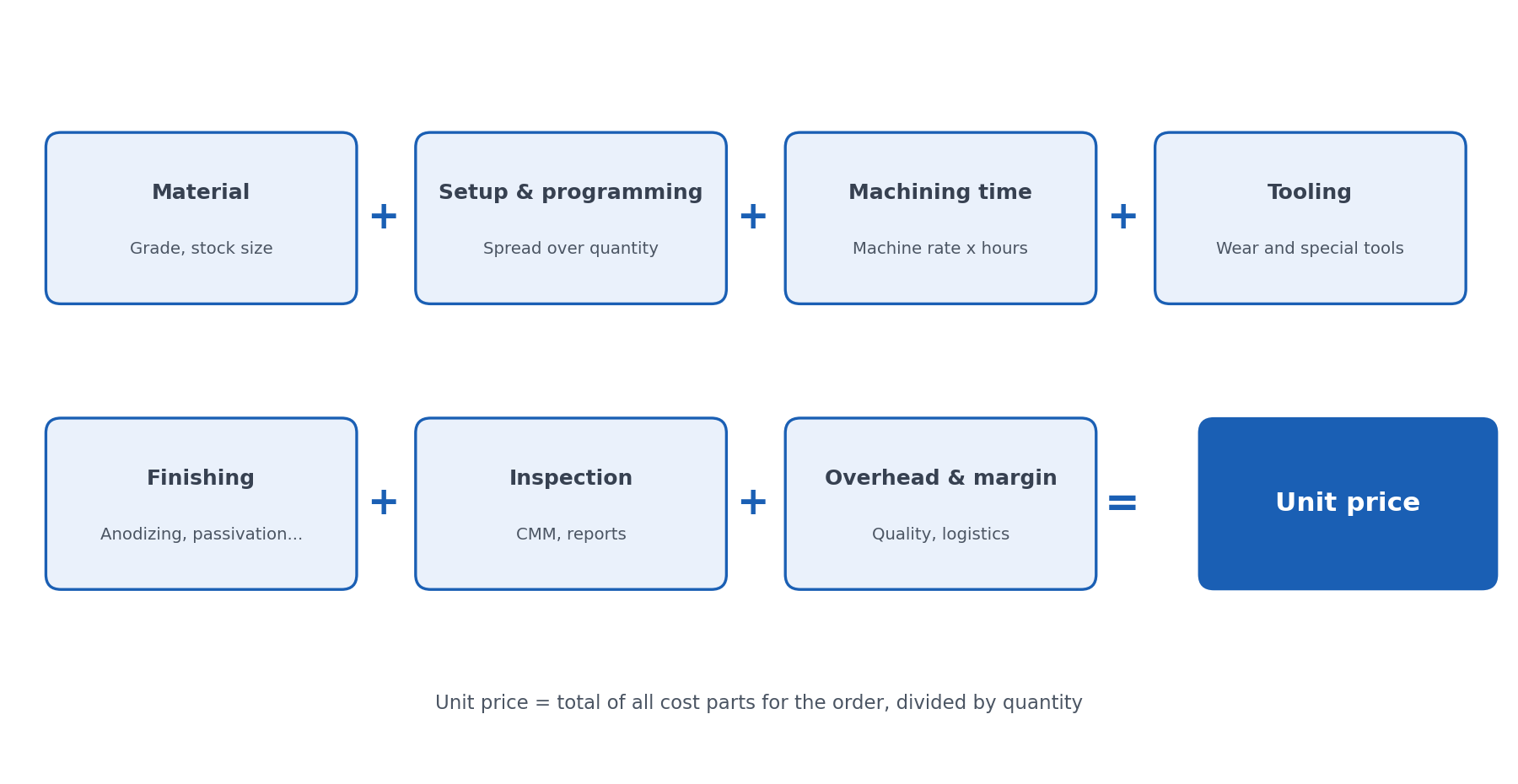
Some of these costs are fixed per order, such as setup and programming. Others repeat for every part, such as material and machining time. That difference explains why quantity has such a strong effect on unit price.
2. The Main Cost Drivers
2.1 Machining Time
For most parts, machining time is the largest cost. It is the hours the part spends on the machine multiplied by the machine rate. Time goes up with:
• Complex geometry, deep pockets, small internal radii, and many features
• Thin walls and slender features that need light cuts to avoid vibration
• Hard or tough materials that must be cut more slowly
• Tight tolerances and fine finishes that need extra finishing passes
The machine rate also depends on the equipment. Multi-axis machines usually have a higher hourly rate, but they can reduce the number of setups, which often lowers the total cost of complex parts. We use 5-axis machining where it makes a complex part faster and more accurate to produce.
2.2 Material
Material cost has two parts: the price of the raw stock and how much of it becomes chips. A part cut from a large block uses far more material than the part itself contains. Material choice also changes machining speed and tool wear, so a more machinable grade can save more in cutting time than it costs in stock.
Availability matters too. Common grades and standard stock sizes are cheaper and ship faster than special alloys or unusual sizes.
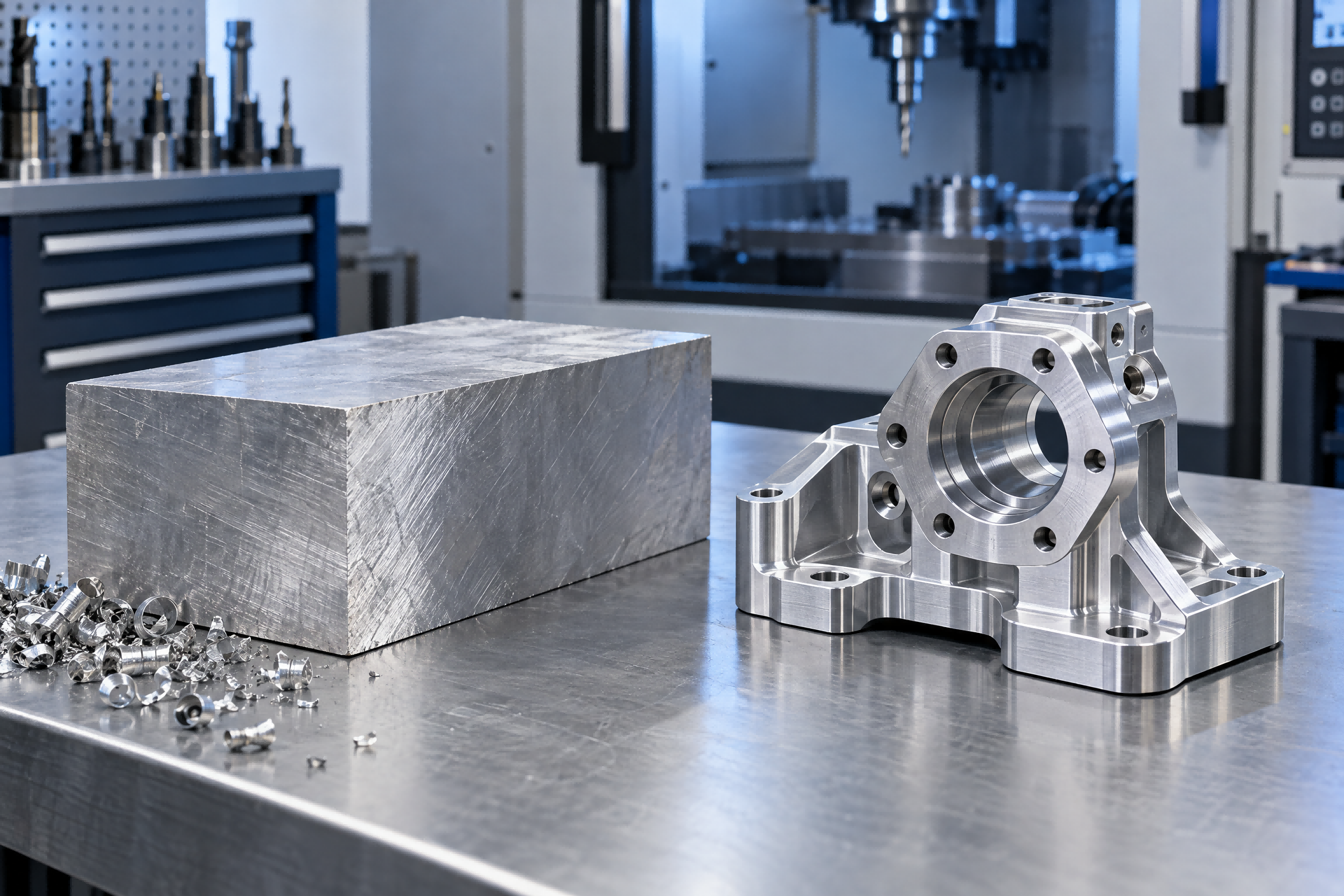
Stock size and material removed both affect material cost.
2.3 Setup, Programming, and Fixturing
Before the first part is cut, someone must program the toolpaths, prepare fixtures, load tools, and verify the first piece. This cost is fixed for the order, so it weighs heavily on small quantities. Parts that need several setups or special fixtures cost more to prepare. Our guide to designing for manufacturability explains how to reduce setups and machining time through small design changes.
2.4 Quantity
Because setup cost is spread across the batch, unit price drops as quantity rises. The effect is strongest at low quantities and flattens as the order grows, because the per-part costs of material, machining, and finishing remain.
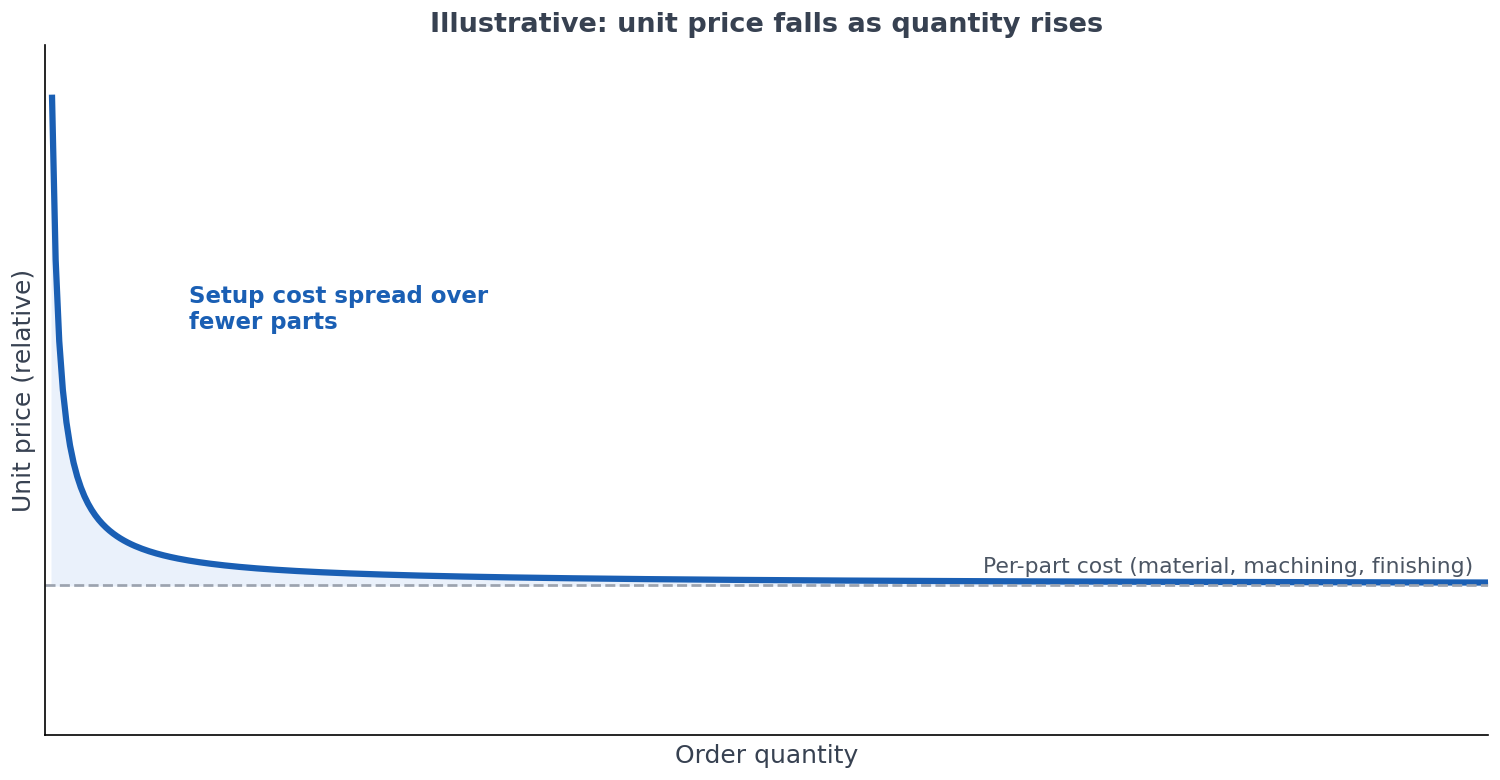
Illustrative curve: setup cost is spread over more parts as quantity grows.
2.5 Tolerances and Inspection
Tighter tolerances need slower cutting, extra finishing passes, and more careful measurement. Our production can hold tolerances as tight as ±0.002 mm on suitable features, but that capability is best reserved for features that really need it. Inspection is also part of the price: a full CMM report on every part takes more time than a sample check. Parts are measured in a constant-temperature inspection room, with traceable reports in Chinese and English. Choose the inspection level the application requires, not more.
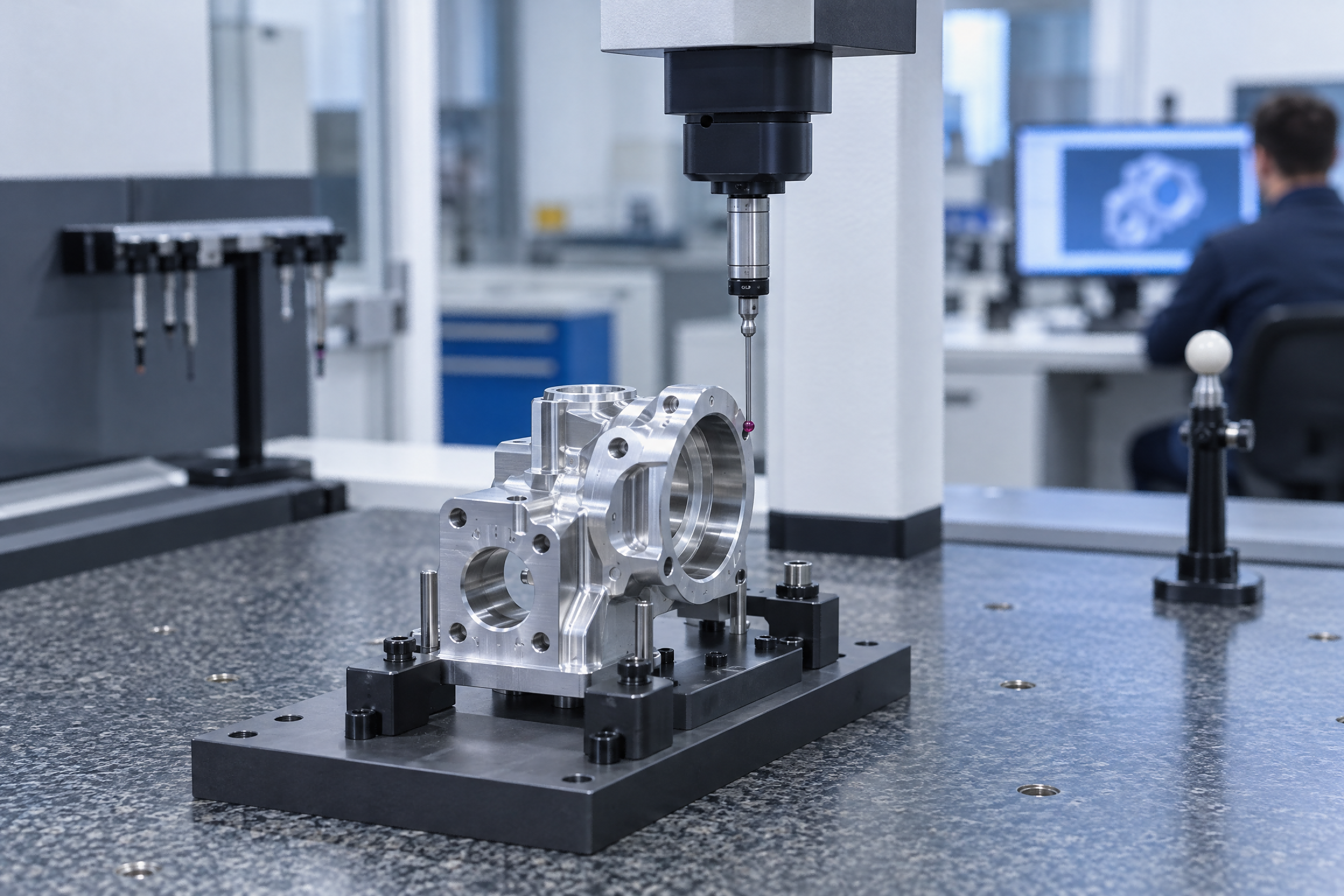
Inspection level is a real part of the price: specify what the application needs.
2.6 Surface Finish and Post-Processing
Anodizing, passivation, plating, and other finishes add process cost and lead time, and some change dimensions. Using the simplest finish that meets the requirement keeps cost down. See our surface finishing guide for the options and how they affect dimensions.
2.7 Lead Time, Packaging, and Documentation
Rush orders can disrupt the production schedule and raise cost. Special packaging, labeling, certificates, and extra documentation also add time. If the schedule is flexible, say so in the request, because it may allow a better price.
3. How to Estimate the Cost of a CNC Machined Part
You do not need a perfect number to plan a budget. A simple build-up gives a useful estimate:
1. Estimate material cost, including the stock needed to cut the part.
2. Estimate machining time from the part's complexity, then multiply by an hourly machine rate.
3. Add setup and programming, and divide it by the order quantity.
4. Add tooling, finishing, and inspection.
5. Add overhead and margin, which vary by supplier.
The example below uses illustrative numbers only. They are not quotes, and real prices vary by part, material, and supplier. The point is to show how quantity changes the unit price.
Cost item (illustrative) | 10 pieces | 100 pieces |
Material, per part | 8.00 | 8.00 |
Setup and programming (120 in total), per part | 12.00 | 1.20 |
Machining (20 min at an assumed 60 per hour), per part | 20.00 | 20.00 |
Finishing, per part | 5.00 | 5.00 |
Inspection, per part | 4.00 | 4.00 |
Subtotal per part, before overhead and margin | 49.00 | 38.20 |
In this example, the same part is about 22 percent cheaper per piece at 100 pieces than at 10, even though the machining time per part is the same. The whole difference comes from spreading the setup cost.
4. Why Quotes From Different Suppliers Can Differ
When two quotes for the same drawing are far apart, the difference is often in the assumptions, not just the price. Compare these points before you decide:
• Tolerance: Is the supplier pricing the tight limits on the drawing or a looser general tolerance?
• Inspection: Which reports and sampling are included?
• Finishing: Is the finish included, and does it match your specification?
• Material: Is the exact grade and condition quoted, and is a certificate included?
• Quantity and lead time: Are they the same on both quotes?
• Packaging and shipping: Are they included or extra?
A complete request prevents mismatched assumptions. Our RFQ checklist lists what to include.
5. Practical Ways to Reduce CNC Machining Cost
1. Simplify the design: add internal radii, avoid deep narrow pockets, and remove features that do not serve a function.
2. Reduce setups by placing features on fewer faces.
3. Relax tolerances on non-critical dimensions and apply tight limits only where they matter.
4. Choose a machinable, readily available material and a standard stock size.
5. Use the simplest finish that meets the requirement.
6. Order larger batches when demand is predictable, or ask for price breaks at several quantities.
7. Allow a flexible lead time where possible.
8. Send a complete drawing package so the quote does not need padding for unknowns.
Frequently Asked Questions
How much does CNC machining cost?
There is no single price. It depends on part complexity, material, quantity, tolerances, finish, and inspection requirements. The best way to get a real number is to send your drawing for a quote.
What is the biggest factor in CNC machining cost?
For most parts it is machining time, which depends on geometry, material, and tolerances. For small orders, setup cost can also be a major share.
Why are prototypes more expensive per part than production runs?
Setup, programming, and fixturing are spread over only a few parts. As quantity grows, that cost is shared across more pieces and the unit price falls.
Do tighter tolerances always cost more?
In general, yes. They require slower machining, extra passes, and more measurement. Use tight tolerances only on features that affect fit or function.
Can I get a quote for both prototypes and batch quantities?
Yes. We support prototypes and batch production, and you can request pricing at several quantities in the same RFQ.
Conclusion
CNC machining cost comes down to a handful of drivers: machining time, material, setup, quantity, tolerances and inspection, finishing, and lead time. Once you see how they fit together, you can estimate prices more accurately, compare quotes on equal terms, and decide where design changes will save the most.
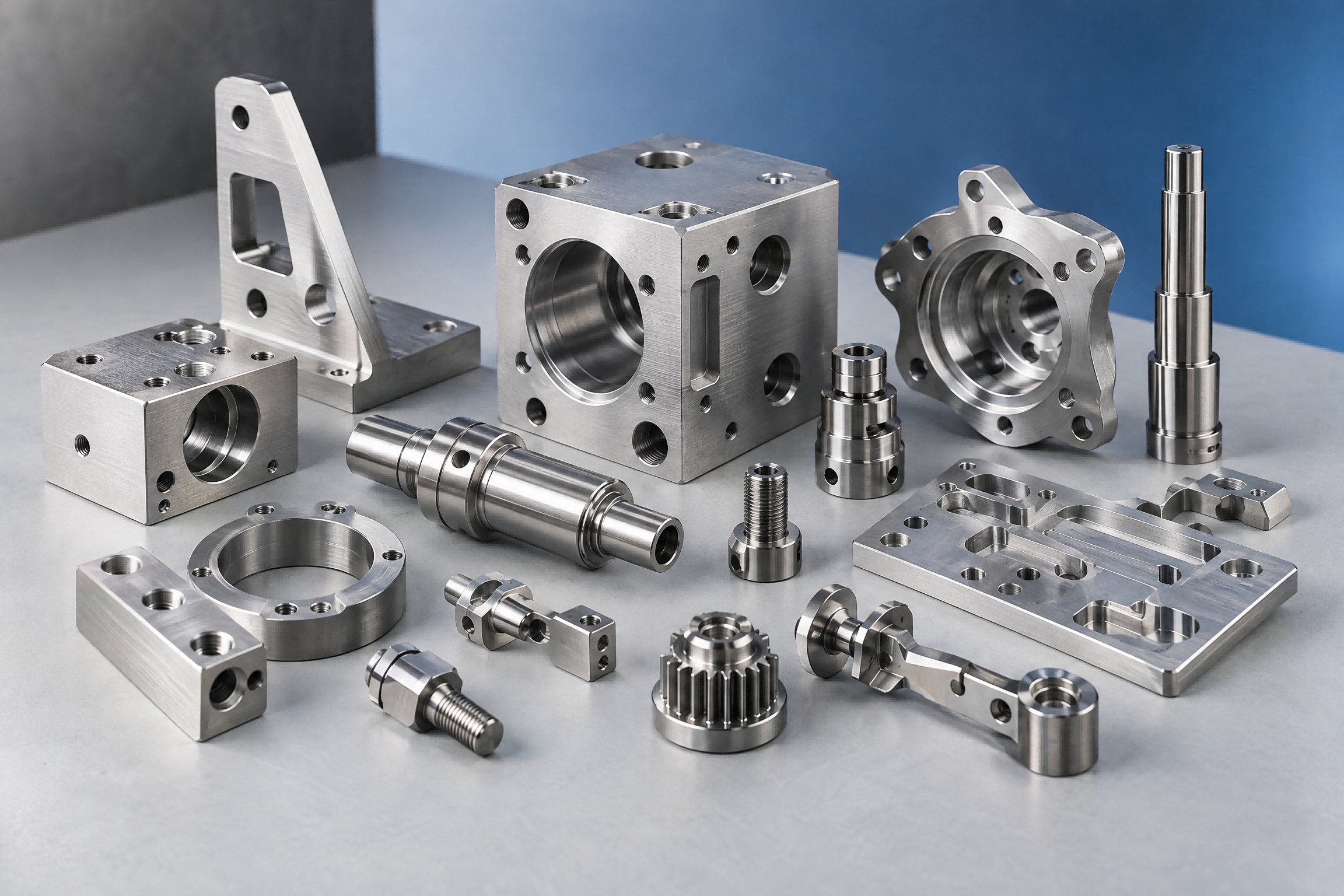
Precision CNC machined parts from Hotar Machining.
Want an accurate price for your part? Contact Hotar Machining and send your drawings, quantity, and requirements, or explore our custom CNC machined components.