


22 Oct 2026
How to Choose a CNC Machining Supplier for Precision Parts: A Buyer's Checklis
Buying CNC precision machined parts is rarely just about price. A part that is 0.02 mm out of tolerance can mean an assembly that will not fit, a batch that has to be remade, or weeks lost on a production schedule. This guide walks through what to check before you place an order, so you can compare suppliers on the things that actually decide whether your parts arrive right.
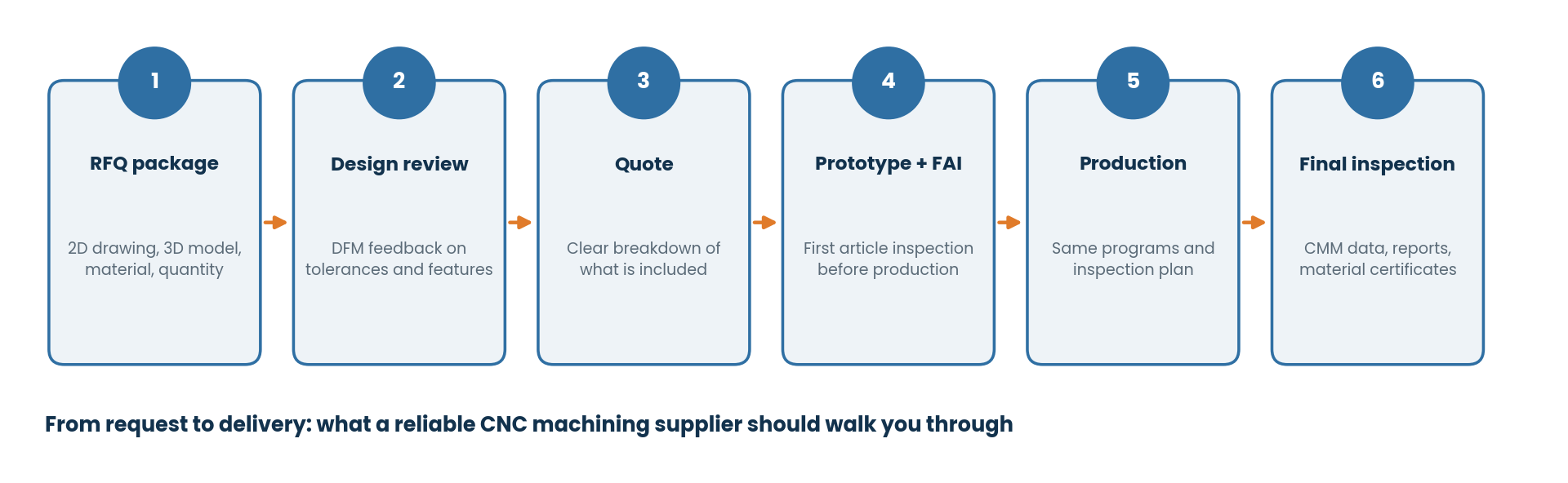
1. Start with a complete RFQ package
A supplier can only quote accurately if the request is complete. Before you contact anyone, prepare:
• A 2D drawing (PDF) with dimensions, tolerances, surface finish requirements and notes
• A 3D model (STEP or similar) so the supplier can check geometry and plan the machining
• Material and grade, for example 6061-T6 aluminum, 304 stainless steel or Grade 5 titanium
• Quantities, both for prototypes and for expected production
• Surface treatment, such as anodizing, passivation or plating (see our CNC surface finishing guide)
• Critical dimensions marked clearly, so the supplier knows where accuracy matters most
A supplier who asks sensible questions about your drawing is usually a better sign than one who returns a price in five minutes without asking anything.
2. Check real capability, not just a list of services
Most machining websites list the same services: milling, turning, 3-axis, 5-axis, prototyping. What matters is whether the shop can do your specific part. Ask:
• What is the maximum part size and the typical size range they work with?
• Which materials do they machine regularly, and which are occasional?
• Do they have 4-axis or 5-axis capability for complex parts, so a part can be machined in fewer setups?
• Can they show photos or samples of parts similar to yours?
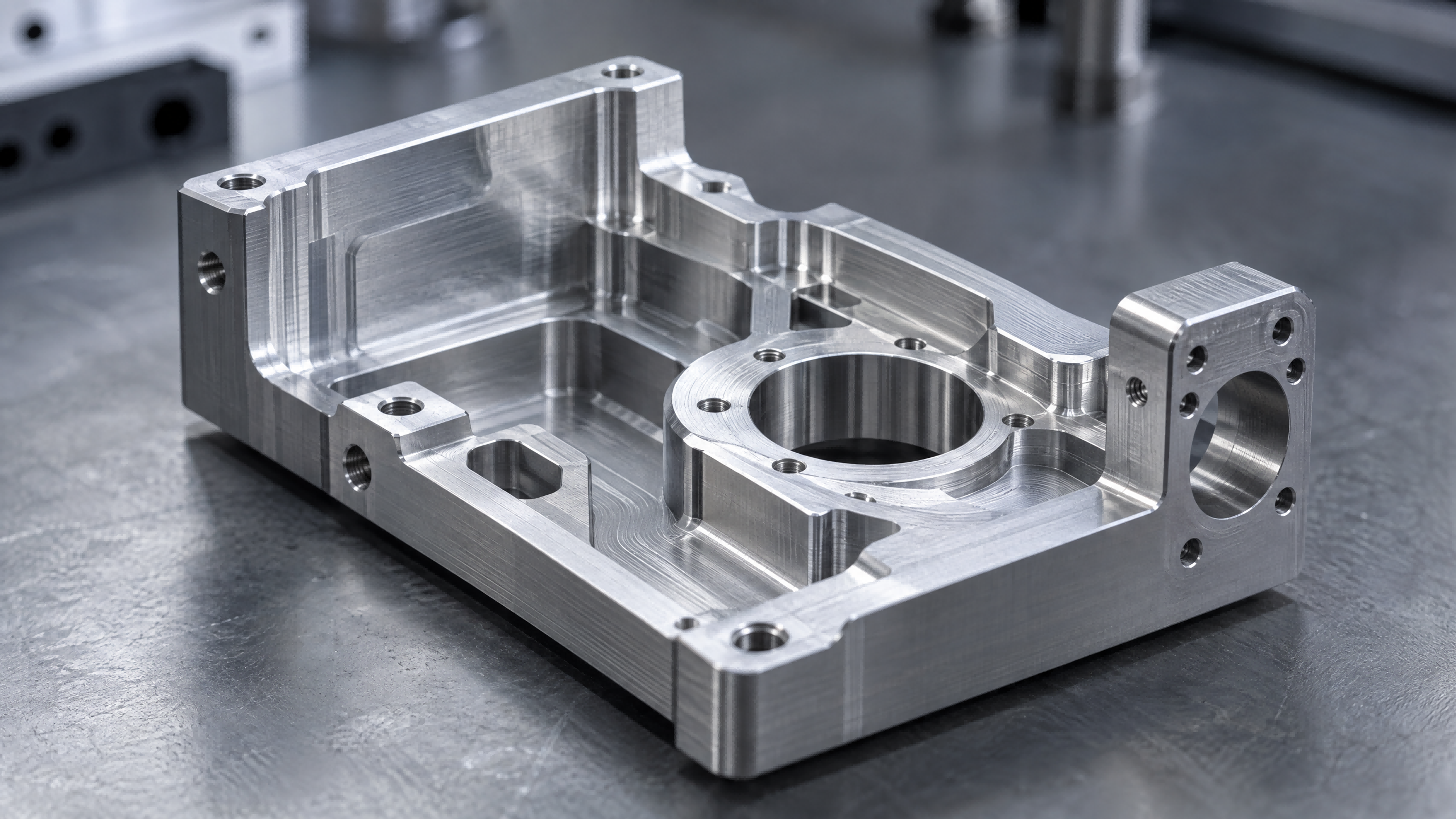
Tolerance is where capability claims are easiest to exaggerate. Holding ±0.01 mm on a drawing is one thing. Holding it consistently across 500 parts is another. Ask what tolerance the shop holds routinely, and what it can hold only with special handling or extra cost.
3. Inspection decides whether you can trust the numbers
A machine can only be as accurate as the way the part is measured. For precision parts, look for:
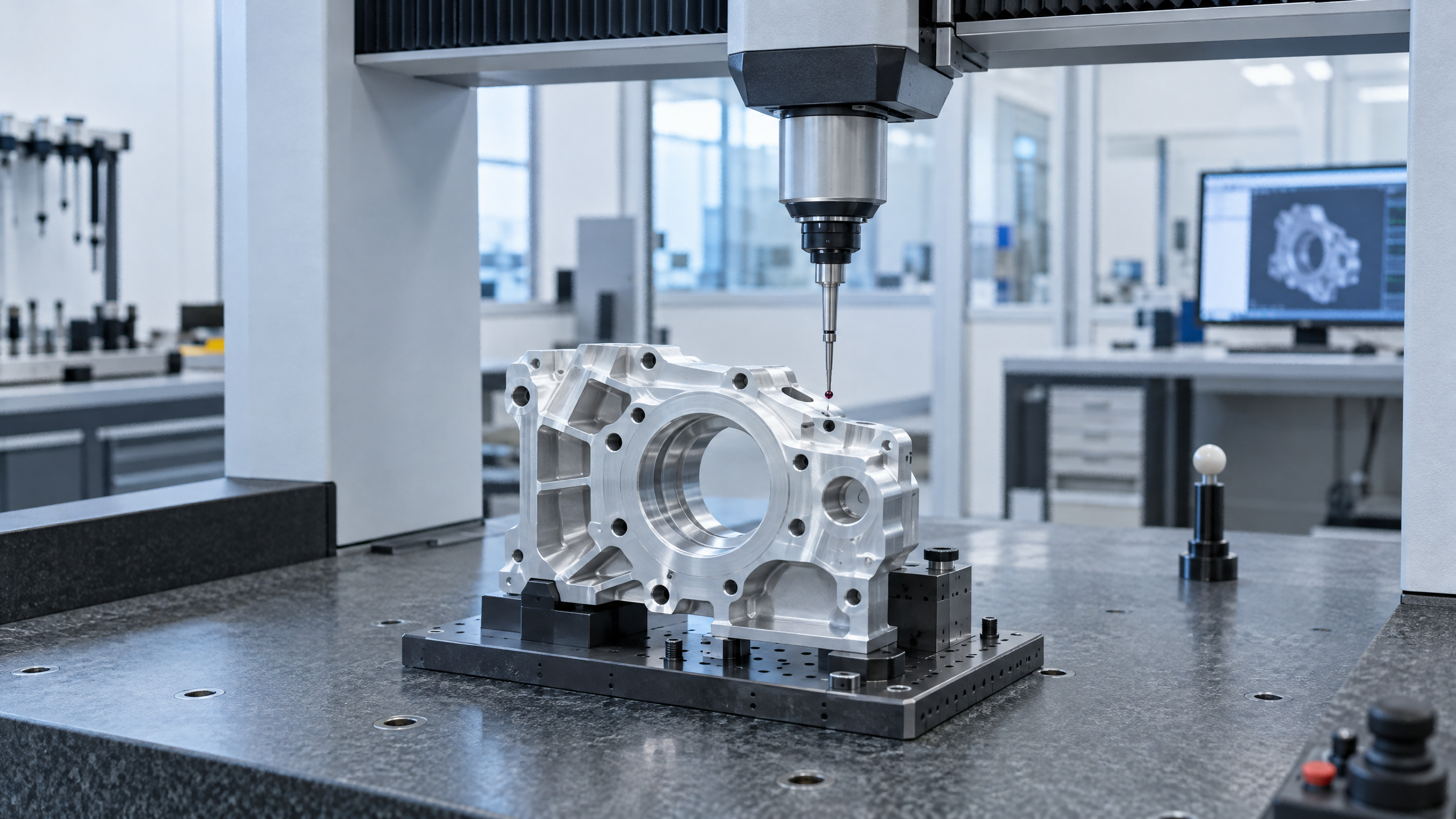
• Coordinate measuring machines (CMM) for verifying complex dimensions and geometric tolerances
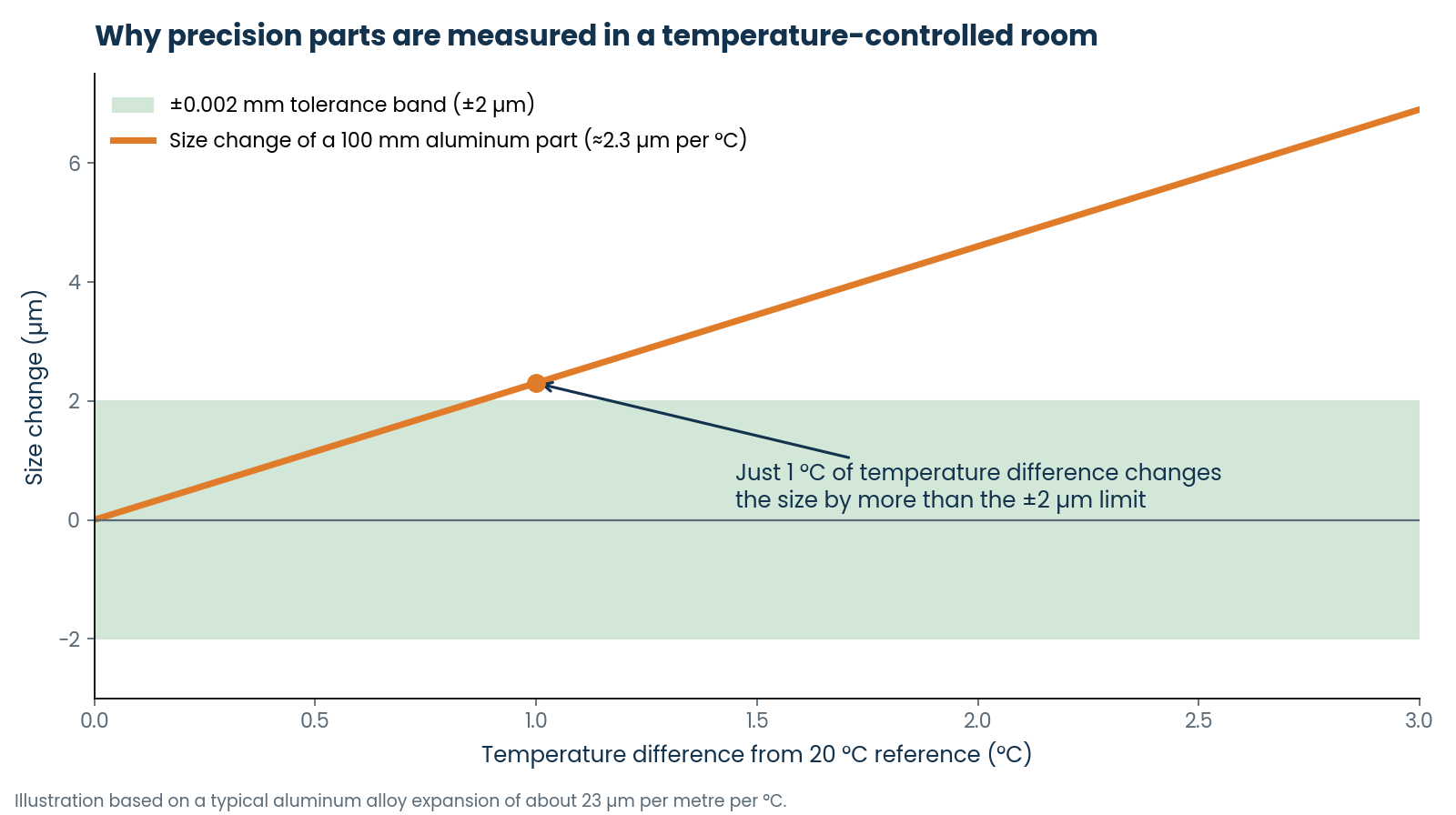
• A temperature-controlled inspection room. Metal changes size with temperature. A 100 mm aluminum part grows roughly 2.3 µm for every 1 °C, which is already larger than the ±0.002 mm tolerance itself
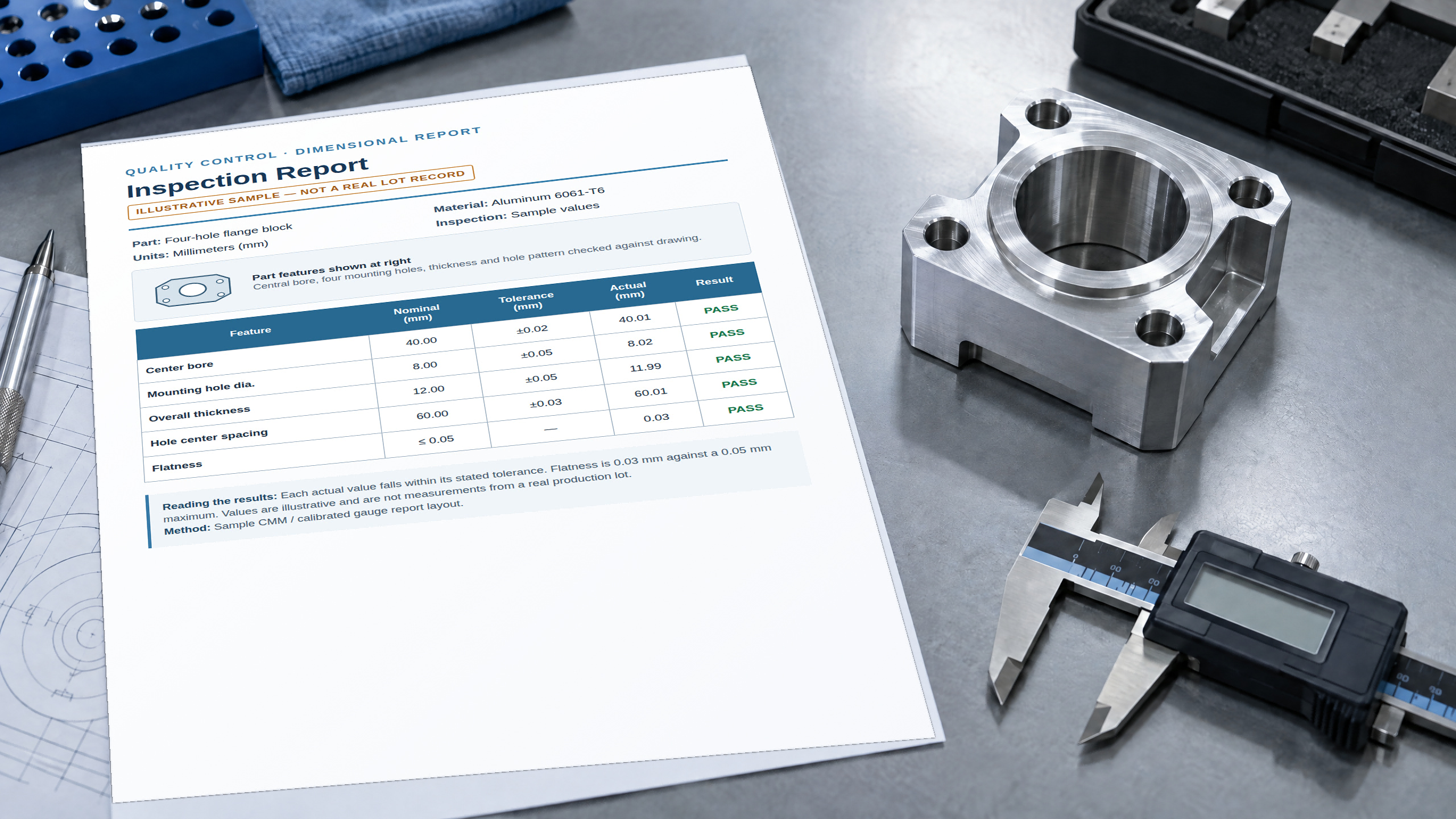
• Inspection reports with actual measured values, not just a "pass" stamp
• First article inspection (FAI) before a production run begins
• Material certificates and traceability from raw stock to finished part
At Hotar Machining, parts are checked on Hexagon and Wenzel CMMs in a constant-temperature lab, with traceable inspection reports available in both Chinese and English. Whichever supplier you choose, ask to see a sample report before you order. A supplier proud of its measurement process will be happy to show one.
4. Look at the quality system
A documented quality system, such as one certified to ISO 9001, shows that a supplier follows defined procedures instead of relying on individual operators. Ask how they handle:
• Incoming material inspection
• In-process checks during machining
• Final inspection before shipment
• Non-conforming parts: how they are recorded, fixed and prevented from recurring
The last point is a useful test. Every shop makes occasional mistakes. The difference is whether the supplier has a clear process for finding and correcting them before parts reach you.
5. Expect design-for-manufacturing feedback
A good machining partner does not just quote your drawing. They review it. Common feedback includes:
• Sharp internal corners that cannot be cut because the tool has a radius
• Deep, narrow pockets that need special tooling and drive up cost
• Very thin walls that can deform during machining
• Tight tolerances placed on non-critical features that could be relaxed without affecting function
This feedback can lower your cost and improve part reliability at the same time. If a supplier never raises a single question about your design, ask yourself whether anyone actually reviewed it. For more design rules, see our guide to DFM for CNC machined parts.
6. Plan from prototype to production
Many projects start with a few prototypes and scale up later. Ask whether the supplier can support both stages, and how they keep results consistent as quantities grow:
• Will the same programs, fixtures and inspection plan be used for production?
• How are tool wear and dimensional drift monitored across a batch?
• What lead times are realistic for prototypes, repeat orders and larger runs?
• Is there capacity to handle your volume without delays?
Switching suppliers between prototype and production often introduces new variables. A supplier that handles both stages reduces that risk.
7. Compare quotes on total cost, not unit price
Two quotes for the same drawing can differ by a wide margin. Before choosing the lower one, check what is behind the number:
• Is the tolerance in the quote the same as the tolerance on your drawing?
• Are inspection, surface treatment and packaging included?
• Are tooling or fixture costs listed separately?
• What happens if parts fail inspection: who pays for rework or replacement?
A very low price sometimes means a quote based on looser tolerances than you specified. The cost of rejected parts, remakes and delayed delivery usually exceeds what you saved on the unit price.
Red flags to watch for
• A quote that comes back immediately with no questions about the drawing
• No willingness to share a sample inspection report or certificates
• Vague answers about which tolerances the shop can hold consistently
• No clear process for handling non-conforming parts
• Pressure to place the order before technical details are confirmed
Supplier evaluation checklist
What to check | What a good answer looks like |
Capability for your part | Relevant examples, clear size and material range |
Tolerance capability | Realistic routine tolerance, with exceptions explained |
Measurement equipment | CMM, temperature-controlled inspection |
Documentation | Inspection reports, FAI, material certificates |
Quality system | Documented procedures, such as ISO 9001 |
Design feedback | Specific, practical questions about your drawing |
Prototype to production | Same process and inspection plan across stages |
Quote transparency | Clear breakdown of what is and is not included |
Frequently asked questions
How tight can CNC machining tolerances go? It depends on the part, material, size and the shop's equipment and measurement setup. Many shops hold ±0.01 mm on suitable features, and tighter tolerances are possible with the right machines, process control and a temperature-controlled inspection environment. Always ask which features can be held and how they will be verified.
What files should I send for a quote? A 2D drawing in PDF with tolerances and notes, plus a 3D model in STEP format. Add the material, quantity and any surface treatment.
Can I order prototypes before committing to production? Yes. Starting with a small prototype run lets you check fit, function and the supplier's quality before scaling up. Make sure the production process uses the same programs and inspection plan as the prototype.
How do I know the parts will match my drawing? Ask for inspection reports with measured values for the critical dimensions, and a first article inspection before the production run begins.
Ready to get a quote?
If you have a drawing for a precision machined part, send it to Hotar Machining with your material, quantity and tolerance requirements. Our engineers will review it and reply with feedback and a quote. Contact us or learn more about our custom CNC machined components. You can also see our inspection setup and capabilities or browse the FAQ.