


10 Nov 2026
Aluminum CNC Machining: 6061 vs 7075 and When to Use Each
Aluminum is one of the most popular materials for CNC machined parts, and 6061 and 7075 are two of the alloys engineers ask about most. Both machine well and both are widely available, but they behave very differently in strength, corrosion resistance, welding, and cost. Choosing the wrong one can mean a part that is heavier than it needs to be, or one that is more expensive than the job requires.
This guide compares 6061 and 7075 for CNC machining, explains how each behaves in the machine, and gives a simple way to decide which one fits your part.
The values in this article are representative comparisons, not design allowables. Exact properties depend on alloy temper, product form, thickness, specification, and supplier. For safety-critical parts, use certified material data and have the design checked against the applicable engineering requirements.
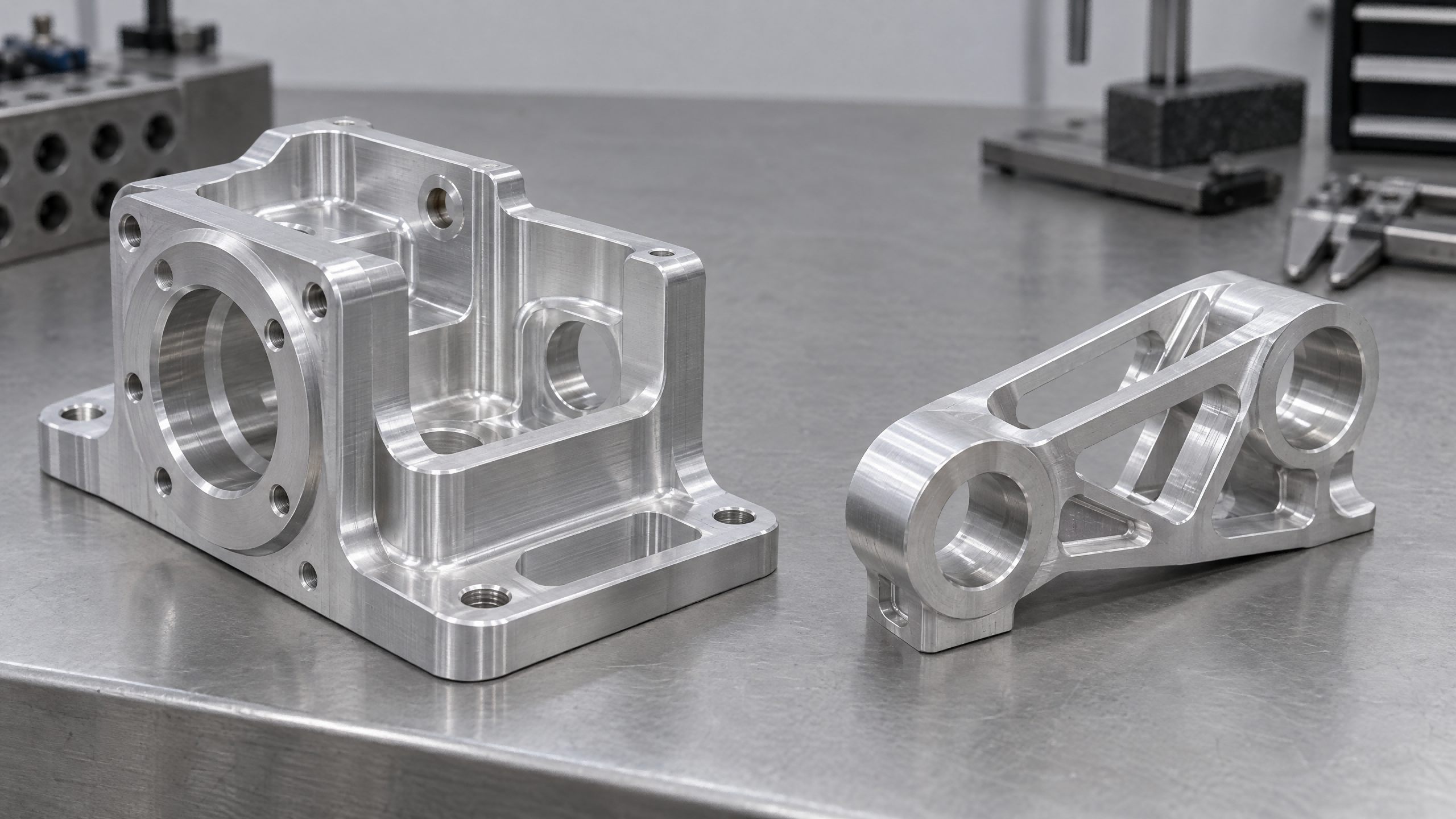
CNC-machined aluminum parts illustrating the different component designs that may be made from 6061 or 7075.
6061 and 7075 are the two aluminum alloys most often requested for precision CNC parts.
1. Quick Answer: 6061 or 7075?
Choose 6061 for general-purpose parts where you want good corrosion resistance, easy anodizing, weldability, and lower cost. Choose 7075 when strength-to-weight ratio is the priority, for example in highly loaded structural parts. We machine both alloys.
6061 aluminum | 7075 aluminum | |
Best known for | All-round alloy, weldable, good corrosion resistance | Very high strength for its weight |
Typical use | Housings, frames, brackets, fixtures, heat sinks | Highly loaded structural and weight-critical parts |
Cost | Lower | Higher |
Choose it when | You want a versatile, economical, easy-to-finish alloy | Strength-to-weight matters most |
2. What Are 6061 and 7075 Aluminum?
Both are heat-treatable aluminum alloys, but they come from different alloy families.
• 6061: An aluminum-magnesium-silicon alloy. It is the all-round workhorse, with a good balance of strength, corrosion resistance, weldability, and machinability. It is used for everything from enclosures to structural frames.
• 7075: An aluminum-zinc alloy with magnesium and copper. It is one of the strongest commonly available aluminum alloys, which is why it is chosen for weight-critical, highly loaded parts.
Both are normally supplied in a heat-treated temper. The temper is part of the specification, so it matters as much as the alloy number. Common choices are T6 for both alloys, T651 for stress-relieved plate, and T73 for 7075 when better resistance to stress corrosion cracking is needed.
T6 is a high-strength heat-treated condition. T651 is a stress-relieved version commonly supplied as plate, which can help reduce movement during machining of larger or thinner parts. T73 is an overaged 7075 condition used where improved resistance to stress-corrosion cracking is important; it has lower strength than peak-strength T6. Confirm the required temper against the design and purchasing specification.
3. 6061 vs 7075: Side-by-Side Comparison
Property (typical, T6 temper) | 6061-T6 | 7075-T6 |
Main alloying elements | Magnesium and silicon | Zinc, magnesium, and copper |
Yield strength | About 275 MPa | About 500 MPa |
Ultimate tensile strength | About 310 MPa | About 570 MPa |
Density | About 2.70 g/cm3 | About 2.81 g/cm3 |
Corrosion resistance | Good | Lower than 6061 |
Weldability | Good | Poor; generally not welded |
Machinability | Good | Good, cuts cleanly but is harder |
Anodizing | Excellent, uniform appearance | Good; appearance can vary more |
Thermal conductivity | Higher | Lower |
Relative cost | Lower | Higher |
The values above are typical handbook figures for the T6 temper and vary by product form and supplier. Always check the material certificate for your actual stock.
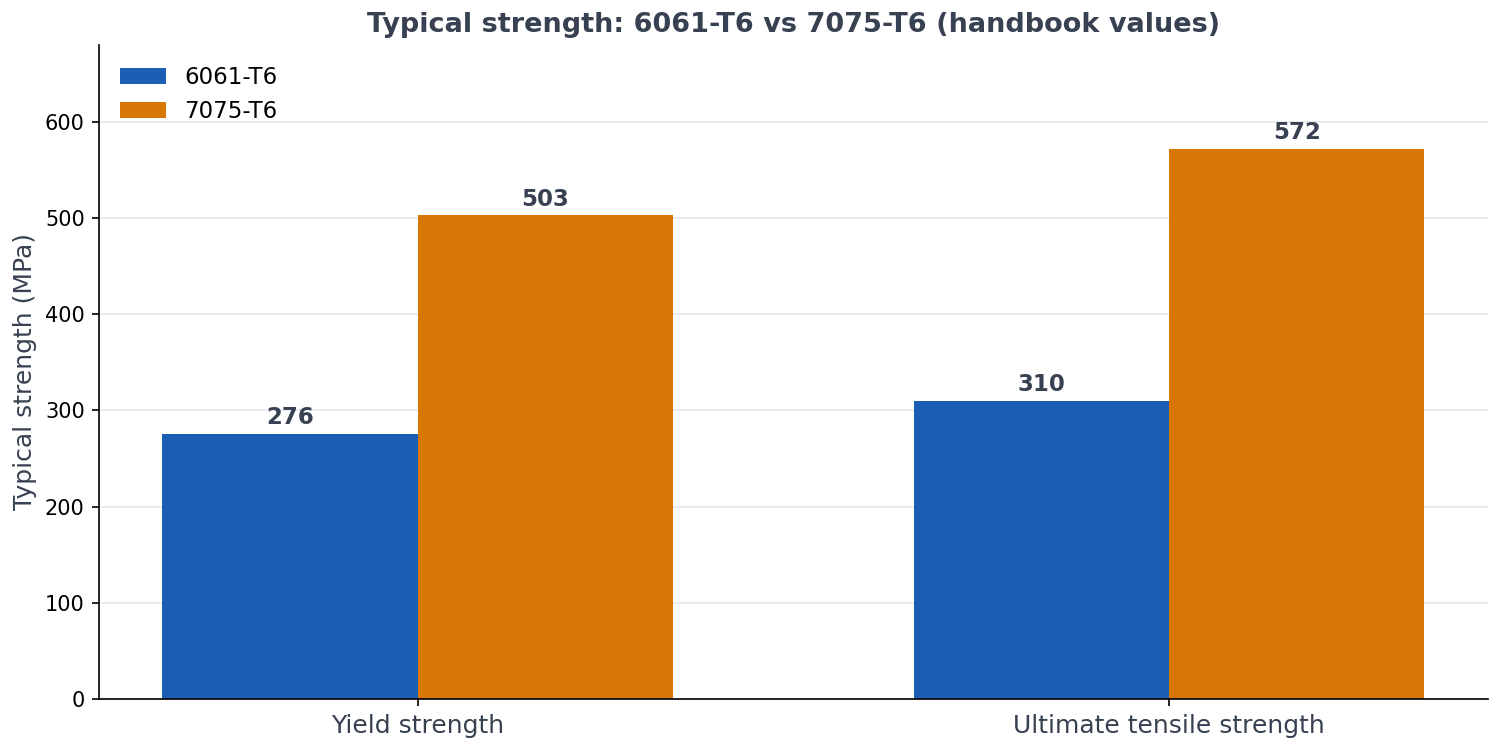
Typical strength of 6061-T6 and 7075-T6. 7075 is roughly 80 percent stronger.
The headline difference is strength. 7075-T6 is nearly twice as strong as 6061-T6 in yield strength, while being only slightly denser. That is why it is chosen when a part must carry high loads at low weight.
Strength is not the same as stiffness. 7075-T6 has much higher yield strength than 6061-T6, so it can carry more stress before permanent deformation in a comparable design. However, the elastic modulus of the two alloys is similar. Switching to 7075 alone therefore does not make a part dramatically stiffer; geometry, wall thickness, supports, and load paths still control deflection.
4. How Each Alloy Machines
Machining 6061
6061 is considered very machinable. It cuts easily at high speeds and takes a good finish. Because it is softer, it can produce long, stringy chips and form a built-up edge if tools are dull or chip evacuation is poor, so sharp tools, the right speeds and feeds, and good coolant flow matter.
Machining 7075
7075 is harder and generally produces shorter chips with a clean, bright surface when cut properly. The higher strength means higher cutting forces and somewhat faster tool wear, so tooling and parameters need care. It is also more sensitive to internal stress, which matters for thin-wall and large flat parts.
Both alloys can produce accurate CNC parts when the tooling, workholding, and cutting parameters match the geometry. Do not assume 7075 will always machine more slowly or wear tools at a fixed rate: results vary with stock temper, tool material and geometry, chip evacuation, and cutting conditions. Thin sections in either alloy can move when material is removed, so stress relief and a balanced roughing-and-finishing sequence may be important.
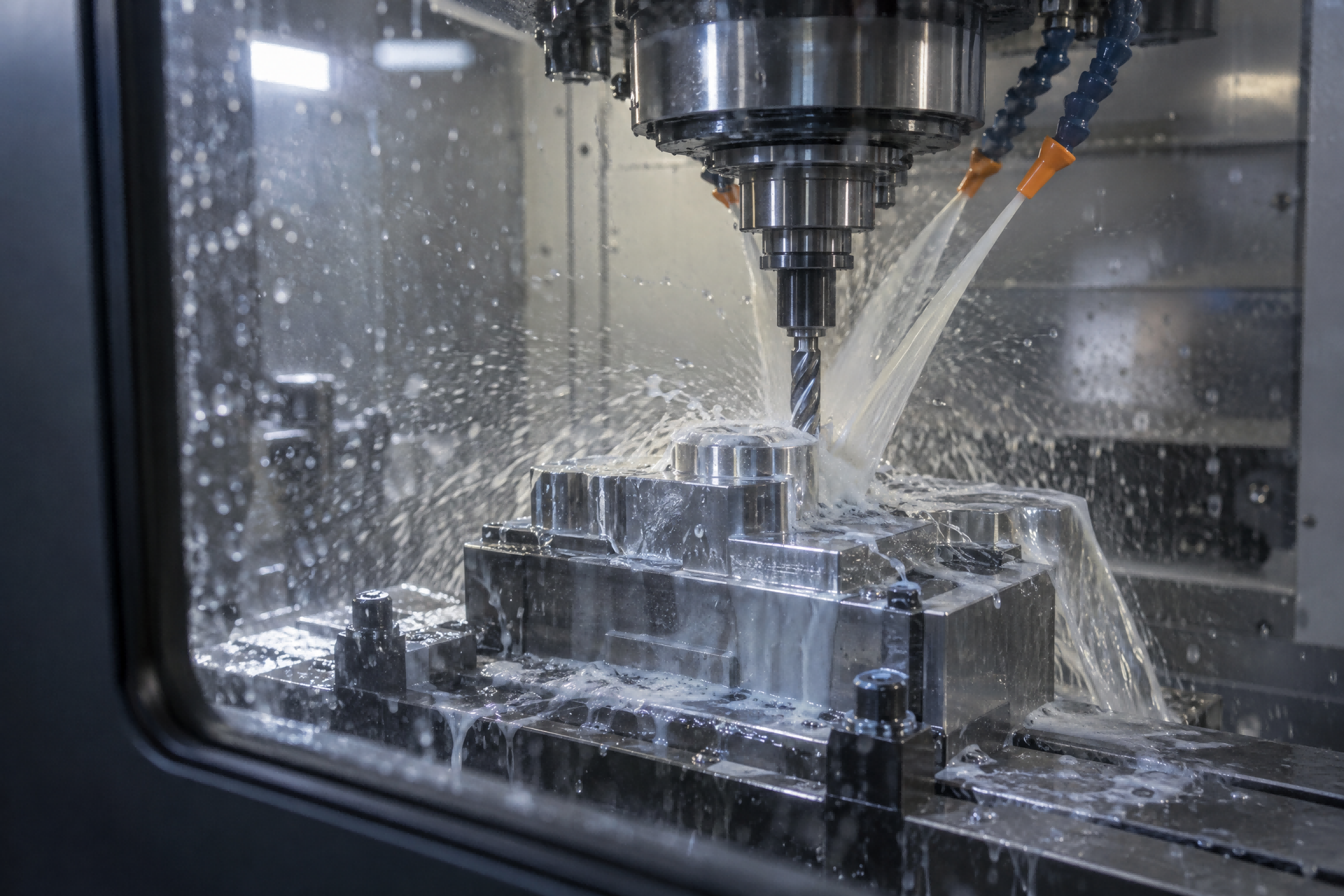
CNC milling setup for aluminum parts.
Sharp tools and good chip evacuation keep aluminum cutting clean and accurate.
Machining Tips for Both Alloys
• Use sharp tools designed for aluminum and keep chips flowing out of the cut.
• Use stress-relieved tempers, such as T651 plate, for large, flat, or thin parts to reduce warping.
• Rough first and finish after, so the part can relax before the final cuts.
• Support thin walls and slender features carefully to avoid vibration.
• Plan clamping so the part is not distorted by the fixture.
Small design choices also help. Our guide to design for manufacturability covers wall thickness, radii, and hole design for machined parts.
5. Corrosion Resistance, Welding, and Anodizing
• Corrosion resistance: 6061 resists corrosion better than 7075. 7075 is more prone to corrosion and, in some tempers, to stress corrosion cracking, so it is often protected with a finish or specified in the T73 temper for demanding environments.
• Welding: 6061 can be welded. 7075 generally should not be fusion welded because it is prone to cracking, so parts that need welding are normally made from 6061.
For welded 6061 assemblies, account for the heat-affected zone. The weld region may not retain the parent material’s T6 strength, so joint design and post-weld requirements should be reviewed rather than using base-metal values for the entire assembly.
• Anodizing: Both alloys can be anodized. 6061 usually gives a more uniform, consistent look, which is helpful for visible parts and dyed colors. 7075 can show more variation in appearance.
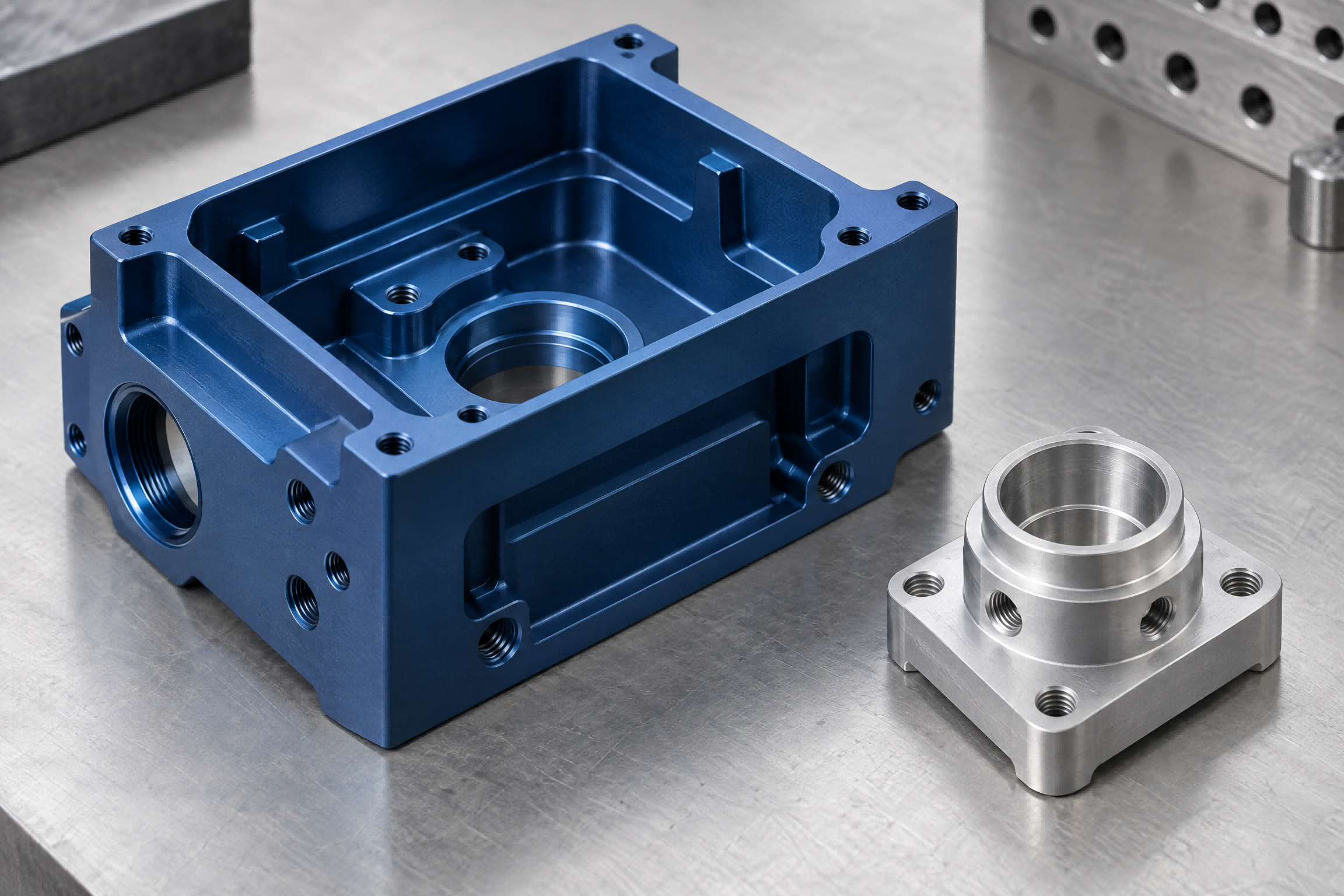
Blue anodized CNC aluminum housing with a clear silver precision-machined component.
Anodizing adds corrosion resistance and color to machined aluminum parts.
Our surface finishing guide explains anodizing types and how coatings affect dimensions.
6. Cost and Availability
7075 typically costs more than 6061, both for raw material and often for machining, because of its hardness and the tooling it needs. 6061 is more widely stocked in many shapes and sizes, which can help lead time. If 6061 meets your strength requirement, it is usually the more economical choice. For a full breakdown of what drives price, see our guide to CNC machining cost.
A useful quote comparison should include more than the raw stock price. Ask suppliers to compare the specified temper, stock size and material yield, machining time, finish and masking, inspection requirements, and order quantity. If the design is still being developed, request feedback on whether 6061 can meet the verified load case before specifying 7075.
7. When to Use 6061
• Housings, enclosures, covers, and panels
• Frames, brackets, and general structural parts at moderate loads
• Fixtures and tooling plates
• Heat sinks and parts where thermal conductivity matters
• Parts that will be welded
• Parts that will be anodized for a uniform, attractive finish
• Projects where cost and availability matter
8. When to Use 7075
• Highly loaded structural parts, links, and arms
• Weight-critical parts where every gram counts
• Parts that need higher strength without moving to steel or titanium
• Precision parts that must resist deformation and wear under load
• Tooling and fixtures that need extra strength
If a 7075 part will be exposed to moisture or chemicals, plan a protective finish and consider the T73 temper.
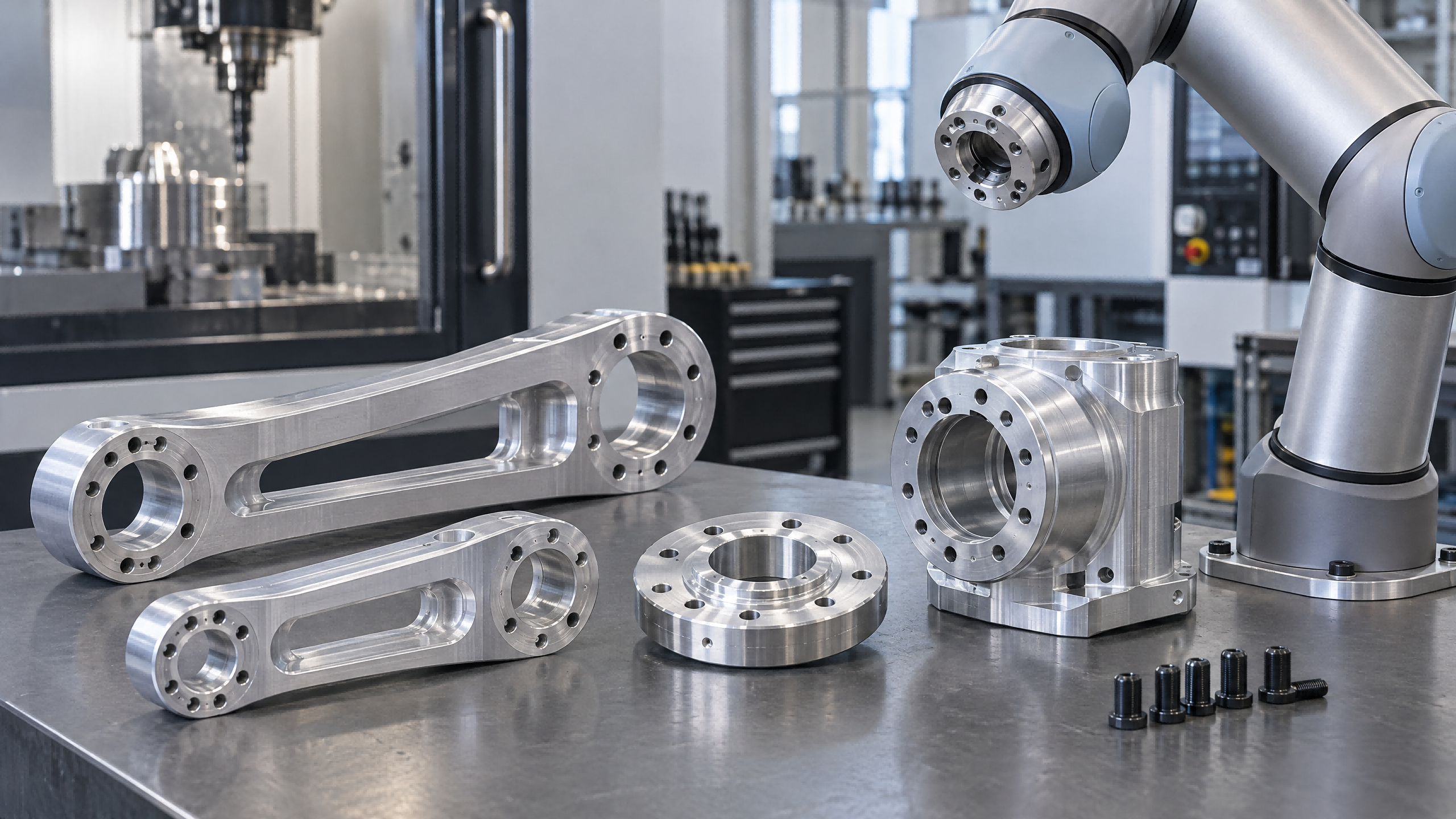
CNC-machined robotic components including structural links, a joint housing, and a flange.
Structural brackets and link arms are common uses for high-strength aluminum.
9. A Simple Decision Guide
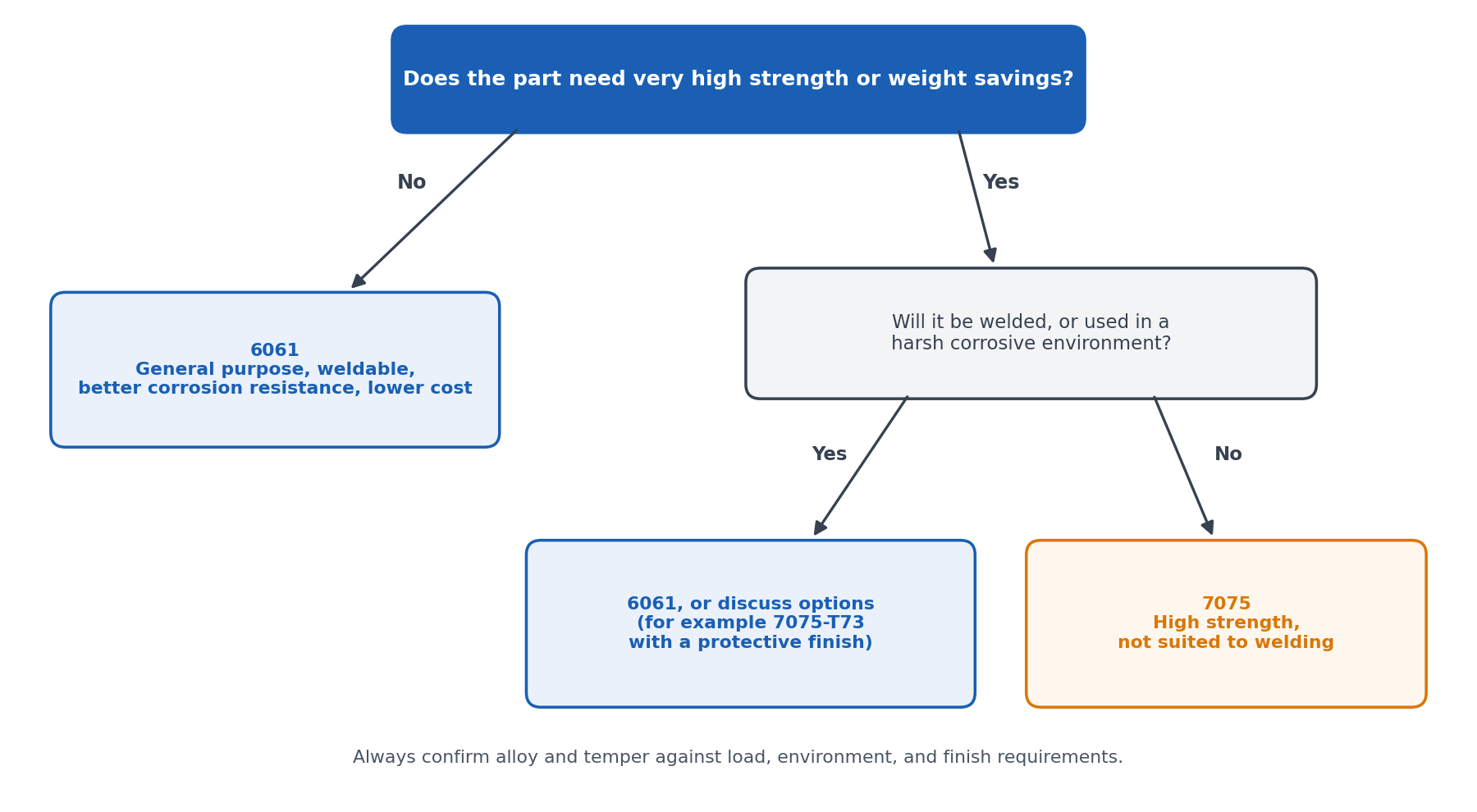
Use this sequence to shortlist an alloy; confirm the final choice with the part’s engineering requirements:
1. Define the load case, allowable deflection, fatigue life, and safety factor. If the part needs higher yield strength or lower mass under a validated design, evaluate 7075. If not, start with 6061.
2. Check the environment and joining method. For better general corrosion performance or a welded design, 6061 is usually the more practical starting point. For 7075 in moisture, salts, or chemicals, review temper and protective finish.
3. Confirm the temper, product form, finish, and critical dimensions. Include coating build-up, material certification, and inspection needs in the drawing and RFQ.
4. Compare total part cost and lead time. Request quotes for both alloys when the design permits, and select 7075 only when its performance benefit is needed.
10. How to Specify Aluminum in Your RFQ
To avoid assumptions, write the alloy and temper together, for example 6061-T6 or 7075-T651, and state any special requirement:
• Alloy and temper (for example T6, T651, or T73)
• Material certificate, if your application requires one
• Surface finish, such as clear or black anodizing, and any masked areas
• Critical tolerances and whether dimensions apply before or after finishing
Our RFQ checklist lists everything to include for an accurate quote. Our production can hold tolerances as tight as ±0.002 mm on suitable features, so tell us which features are critical.
Frequently Asked Questions
Is 7075 aluminum better than 6061?
It is stronger, but not better for every job. 6061 is easier to weld, more corrosion resistant, and less expensive. The right choice depends on your load, environment, and budget.
Which is stronger, 6061 or 7075 aluminum?
7075. In the T6 temper its yield strength is roughly 80 percent higher than 6061-T6.
Which aluminum alloy is easier to machine?
Both machine well. 6061 is softer and cuts easily, while 7075 is harder and cuts cleanly but wears tools faster. Good tooling and parameters make either alloy practical.
Can 7075 aluminum be anodized?
Yes. It can be anodized, though the appearance can vary more than on 6061.
Can you machine both 6061 and 7075?
Is 7075 significantly stiffer than 6061?
No. Their elastic moduli are similar. 7075 is stronger, but stiffness and deflection depend mainly on the part geometry and support conditions.
Does welding affect 6061-T6 strength?
Yes. Welding can reduce strength near the weld because heat changes the local temper. Design the joint using suitable post-weld properties, not only the original base-metal values.
Yes. We machine both alloys, and you can request quotes for each so you can compare cost and lead time.
Conclusion
6061 and 7075 are both excellent aluminum alloys for CNC machining, and the right choice comes down to what the part must do. Choose 6061 for versatility, corrosion resistance, weldability, and cost. Choose 7075 when strength-to-weight is the priority. Specify the alloy and temper clearly, and plan the finish together with the material.
For many housings, brackets, and general-purpose structures, 6061 is the sensible baseline. Choose 7075 when the required strength-to-weight performance justifies the added cost and the environment and joining method are suitable. In either case, specify the full alloy and temper and evaluate the finished part—not only the raw material.
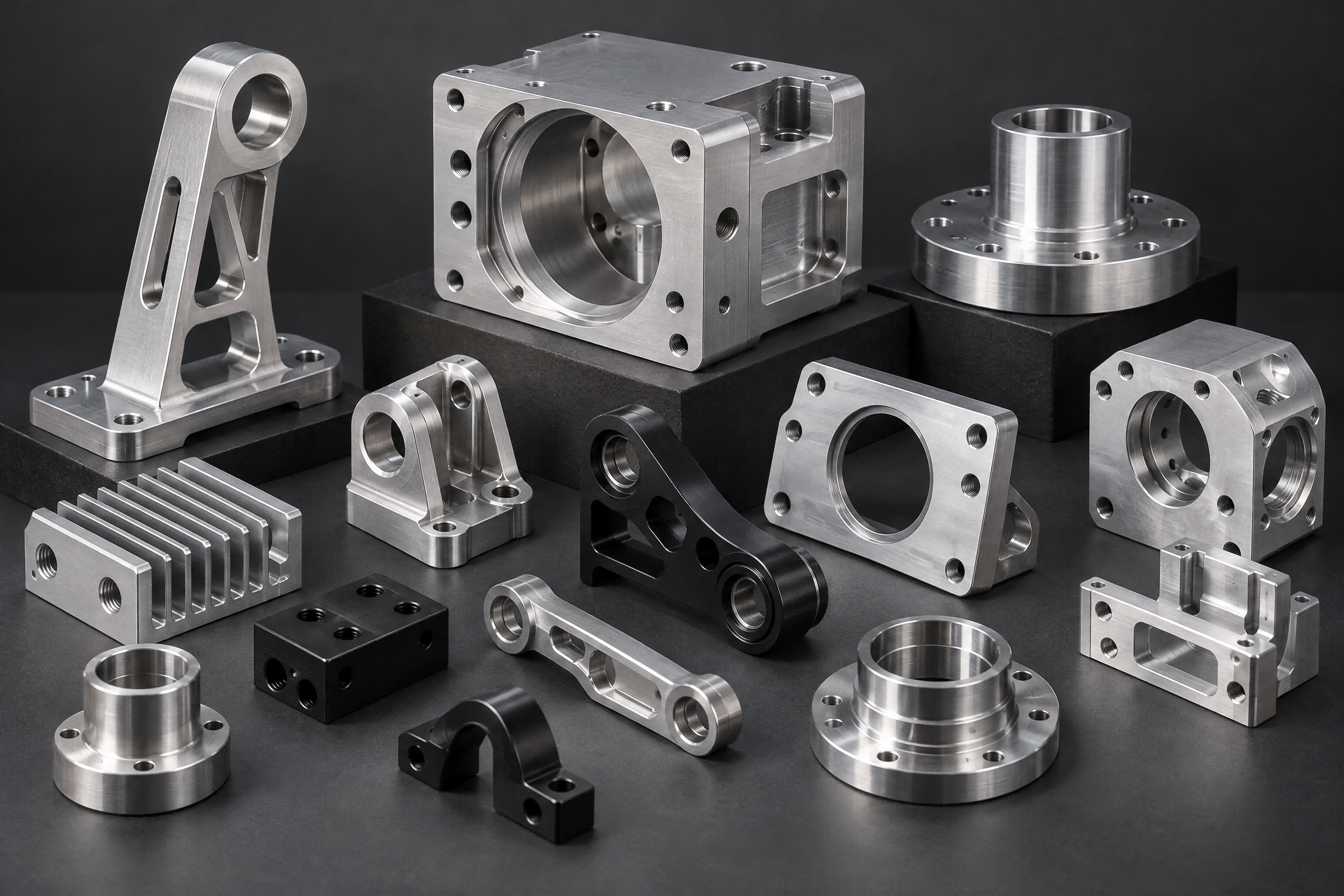
A range of precision CNC-machined aluminum components from Hotar Machining.
Precision CNC machined aluminum parts from Hotar Machining.
Not sure which alloy fits your part? Contact Hotar Machining with your drawings and requirements, or explore our custom CNC machined components.